30 Ways to Repurpose Blogs, Videos and Podcasts
Repurposing ideas grouped by what you already have (blog posts, videos, podcasts, research and customer stories), plus a one-episode content plan.

Updated
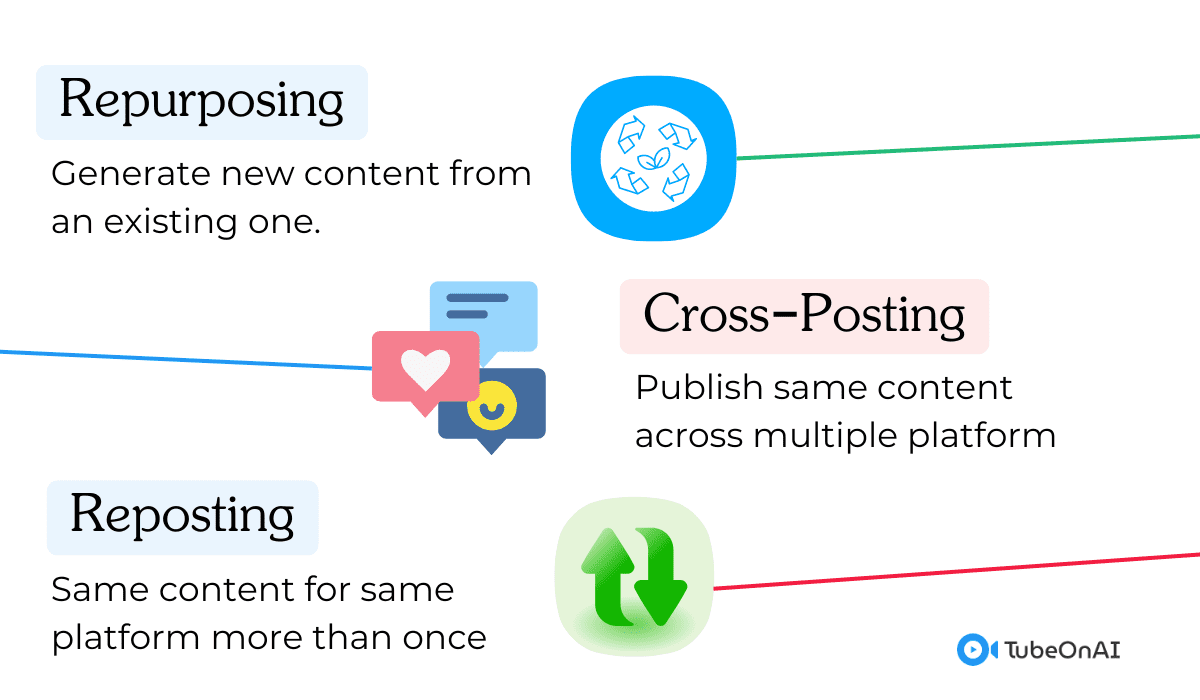
Repurposing content means taking something you’ve already made, such as a blog post, video, podcast episode or research report, and turning it into new formats for other channels and audiences. Below are 30 ways to do it, grouped by the type of content you’re starting with, so you can jump straight to blog posts, videos or podcasts.
If you’re new to the idea, start with our explainer on what content repurposing is. If you’re reusing someone else’s material rather than your own, read how to repurpose other creators’ content first. For software that automates much of this, see our comparison of the best content repurposing tools.
Why Repurposing Is Worth the Effort
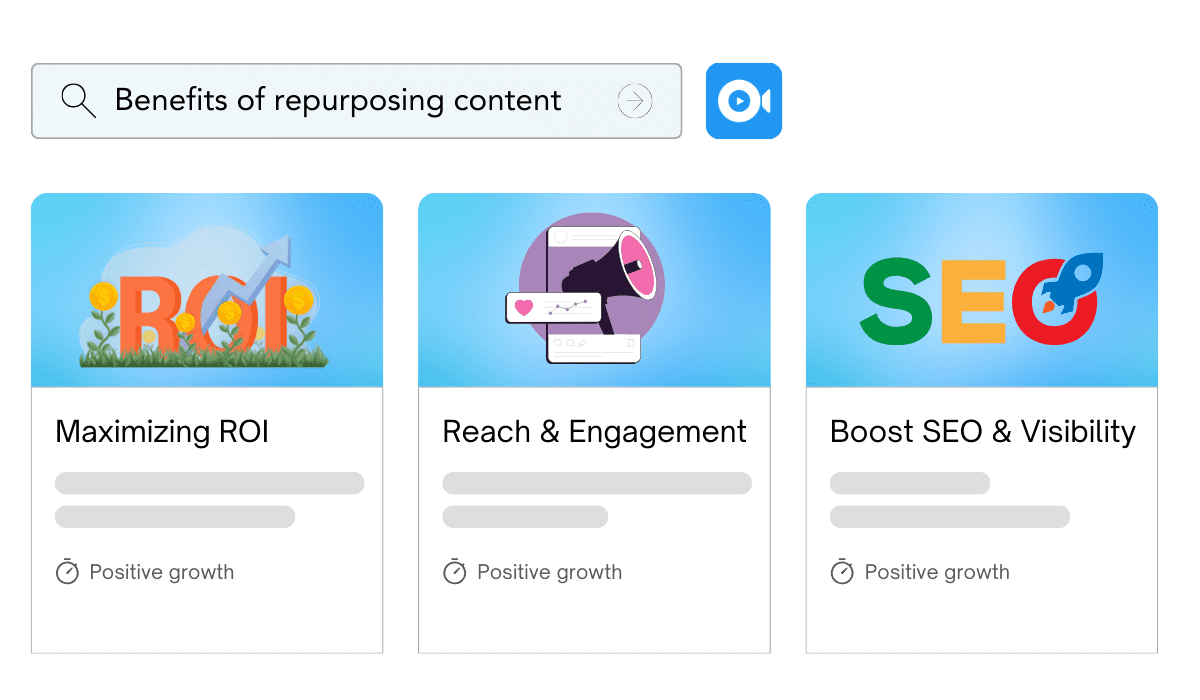
- It saves time. Adapting something that already works is faster than starting from a blank page, which makes a consistent publishing schedule easier to keep.
- It reaches people where they are. Some of your audience reads, some watches, some listens. The same idea in several formats reaches all of them.
- It gives good ideas a longer life. A post or episode that did well once can keep working in a new format, instead of sitting in an archive.
- It can widen your search footprint. A podcast episode with a written companion post, or a video with a blog version, gives search engines text to index on top of the original.
Repurposing Blog Posts and Articles
1. Turn Blog Posts into Social Media Posts
Take a long post and split it into short, standalone pieces for social media: key points, statistics or a single tip each.
Identify the most useful parts of the post, then use them as captions or put them on simple graphics. Share them on Instagram, Facebook or LinkedIn, linking back to the full post.
2. Create an X (Twitter) Thread from a Blog
Pick 5–10 takeaways from a well-performing post and write one post for each, chained as a thread on X. For example, a blog on “Marketing Tips for Small Businesses” becomes one post per tip, with the final post linking to the article.
3. Transform a Blog into an Email Newsletter
Instead of writing entirely new content for your list, send a summary of a relevant blog post as an email newsletter, ending with a call to action to read the full piece.
4. Turn Long Blog Posts into an E-book
A series of related posts can become a downloadable e-book. Compile them, organize them into chapters, add an introduction and conclusion, and design it with a tool such as Canva or Adobe. For example, several posts on social media marketing could become “The Ultimate Guide to Social Media Marketing.”
5. Turn Blog Posts into Slide Decks
Break an educational post into one idea per slide. Decks work for meetings and webinars, and you can upload them to SlideShare for wider visibility.
6. Turn Written Content into Audio
This is content-to-audio repurposing, and it comes in two flavors:
- A podcast episode: rewrite a popular post as a conversational script, then record it or discuss it with a guest. It reaches people who’d rather listen during a commute or workout.
- A narrated version: a straight reading of the article, embedded at the top of the post or offered as a download. Text-to-speech tools like Woord turn text into downloadable MP3 audio, or you can record it yourself.
TubeOnAI can also turn text summaries into audio you can listen to, which is handy for reviewing your own content on the go.
7. Transform Blog Posts into Visual Tutorials
Turn a process-based post into a step-by-step visual: screenshots or simple graphics for each step, combined into an image carousel, an infographic or a short video.
8. Repurpose Blog Content into Guest Posts
Rework one of your best posts for another site’s audience and style, rather than republishing it word for word. Include a link back to the original. It’s a way to reach new readers and build relationships with other publishers.
9. Create a Pinterest Board from Visual Content
Pinterest is built around images, so collect your blog visuals, infographics and quote graphics into boards organized by topic. Each pin links back to your site.
10. Design Quote Graphics for Social Media
Pull memorable lines from your posts, podcasts or webinars and turn them into quote graphics with a tool like Canva. A line like “Consistency is key in content marketing” works well on Instagram or Pinterest.
11. Turn Blog Comments into Q&A Content
Your comments section is a list of what readers want to know. Turn common questions into a dedicated Q&A post or FAQ page, or answer them one at a time as social posts or polls. Tools like Buffer or Hootsuite can help you schedule them. It also shows readers you listen.
Repurposing Videos and Webinars
With long videos, it helps to summarize the video first so you can find the strongest moments before you start cutting or writing.
12. Convert Videos into Blog Posts
Tutorials, interviews and talks make strong blog posts for people who prefer reading. A “How to Bake a Cake” video, for example, becomes a step-by-step post with screenshots from the video. TubeOnAI can turn a video into a draft blog post with its blog post generator, which you then edit.
13. Break Down Webinars into Short Clips
Split a long webinar into short clips, one idea each. An “SEO Basics” webinar could become clips on keyword research, on-page SEO and link building for Instagram Reels, YouTube Shorts or TikTok.
14. Convert a Webinar into a Course
Outline the webinar’s sections, turn each into a lesson or module, and add quizzes or downloadable resources. Host it on a platform like Teachable or Udemy. Courses often have a higher perceived value than free content, and you can charge for access.
15. Convert Videos into GIFs
Short, looping GIFs of a reaction, a demo step or a punchline grab attention on social media and in emails, where a full video wouldn’t autoplay.
16. Repurpose Tutorials into How-To Guides
A video tutorial can become a written guide readers can scan and come back to. Break it into numbered steps and add screenshots and examples. TubeOnAI’s 150+ repurposing templates, or a custom prompt, can produce a first draft of a guide from the video.
17. Create a Podcast from a Webinar
Extract the webinar’s audio, cut the parts that rely on visuals, and edit it into an episode. Tools like Audacity or Riverside can help with editing. “SEO for Beginners” works just as well as a listen.
18. Turn Interviews into Social Media Stories
Pick the best quotes or highlights from an interview and turn each into a short story or post for Instagram Stories or TikTok.
Repurposing Podcasts
One episode can be repurposed into written content, video and social posts, which matters most for podcasts because audio on its own is hard to search or skim.
19. Turn Episodes into Blog Posts
Take a topic discussed in an episode and expand it into a post. If an episode covers “Social Media Marketing Tips,” write a post that goes deeper on each tip, embedding the episode player. An AI podcast summarizer such as TubeOnAI’s can pull out the key points to build the outline from.
20. Publish Show Notes and a Transcript
Give every episode a page with a summary, the main points with timestamps, links mentioned and the full transcript. It makes the episode searchable and accessible to people who can’t listen. See how to get a transcript of a Spotify or Apple podcast episode.
21. Publish a Video Version on YouTube
If you record video while you record audio, publish the full episode on YouTube. Even with audio only, a static image or simple waveform lets you put the episode in front of people who search YouTube for podcasts.
22. Cut Audiograms and Short Vertical Clips
Pick 30–90 second moments with a strong opinion, a surprising fact or a good story. Add captions, and pair audio-only clips with an image or waveform (an “audiogram”). Post them to Reels, Shorts, TikTok and LinkedIn with a link to the full episode.
23. Turn Podcasts into Quote Cards
Pull a memorable line from the episode, for example from a leadership-skills interview, and design it as a quote card naming the speaker and the show.
Repurposing Research, Presentations and Data
24. Create an Infographic from Research
If a post or report includes statistics, summarize the key figures in an infographic using a tool like Canva. A post on remote work trends, for example, becomes one shareable image.
25. Turn Research into an Industry Report
Compile in-depth research from several posts into a formal downloadable report with charts and graphs, such as “Trends in E-commerce.” It positions you as a source of expertise and can be offered in exchange for an email address.
26. Convert Presentations into Blog Posts
If you’ve given a presentation, the slides are already an outline. Expand a deck on “Effective Team Management” into a post that explains each slide’s point in full.
27. Turn White Papers into Video Tutorials
Take the core concepts of a text-heavy white paper and present them as a series of short explainer videos. They reach people who learn better visually.
28. Use Poll Results for New Content
Run a poll or survey such as “What’s your biggest marketing challenge?” and turn the results into a blog post, an infographic or a series of posts that address the top answers.
Repurposing Customer Stories
29. Turn Testimonials into Case Studies, and Back Again
Expand a short testimonial into a case study by working with the customer to document their starting challenge, what they did and the results they actually measured. It works the other way too: approved quotes from a published case study make concise testimonials for your website or sales pages. Only use real quotes and figures, with the customer’s permission.
30. Turn Case Studies into Blog Posts
Pull out the problem, the solution and the results, and write them up as a story-driven post with relevant data and quotes. Readers trust real examples more than claims.
Example: One Podcast Episode, a Month of Content
Here’s how a single interview episode could fill a month of content using the ideas above:
| Week | What to publish | Ideas used |
|---|---|---|
| Week 1 | The episode, plus a show notes page with a transcript; a full video version on YouTube | #20, #21 |
| Week 2 | A blog post expanding on the main topic; 3–4 short captioned clips | #19, #22 |
| Week 3 | Quote cards from the guest; an X thread or LinkedIn post with the key takeaways | #23, #2 |
| Week 4 | A newsletter recapping the episode’s lessons; a Q&A post answering listener questions | #3, #11 |
Adjust the mix to the channels your audience actually uses. The point is to plan the outputs when you plan the episode, not after.
Tools That Speed Up Repurposing
Most of these ideas can be done by hand, but a few tools remove the slow parts:
- Design: Canva for quote cards, infographics, carousels and e-books.
- Audio and video editing: Audacity or Riverside for podcast and webinar audio.
- Podcast hosting: Buzzsprout or Spotify for Creators (formerly Anchor) to publish and distribute episodes.
- Scheduling: Buffer or Hootsuite to queue social posts.
- AI summarizing and repurposing: TubeOnAI summarizes YouTube videos, podcasts, articles and PDFs. It then turns them into blog posts, X threads, LinkedIn content or email newsletters using 150+ repurposing templates or your own prompts.
For a side-by-side comparison of AI options, see our guide to the best content repurposing tools.