
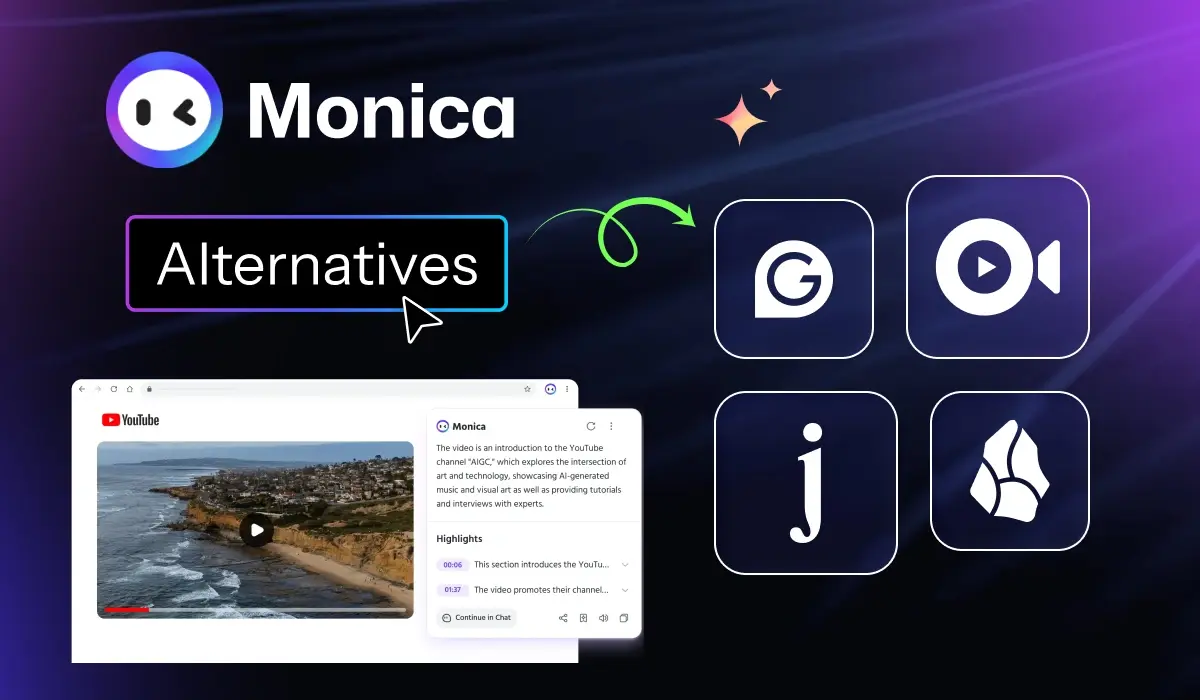
Monica AI has made AI assistance accessible to millions, but many users find that it falls short of their specific requirements.
Competing tools now offer distinct advantages, including stronger natural language processing, deeper integration into ecosystems, transparent pricing, and specialized industry features.
Some tools focus heavily on academic research support, while others prioritize creative professionals or developers with coding needs.
If you’re hitting usage limits too quickly, seeking more sophisticated automation, or needing better data-handling practices, these Monica alternatives offer distinct strengths worth evaluating.
This guide covers leading options to help you identify an AI assistant that aligns with your actual workflow and priorities.
Best Monica AI Alternatives
TubeOnAI
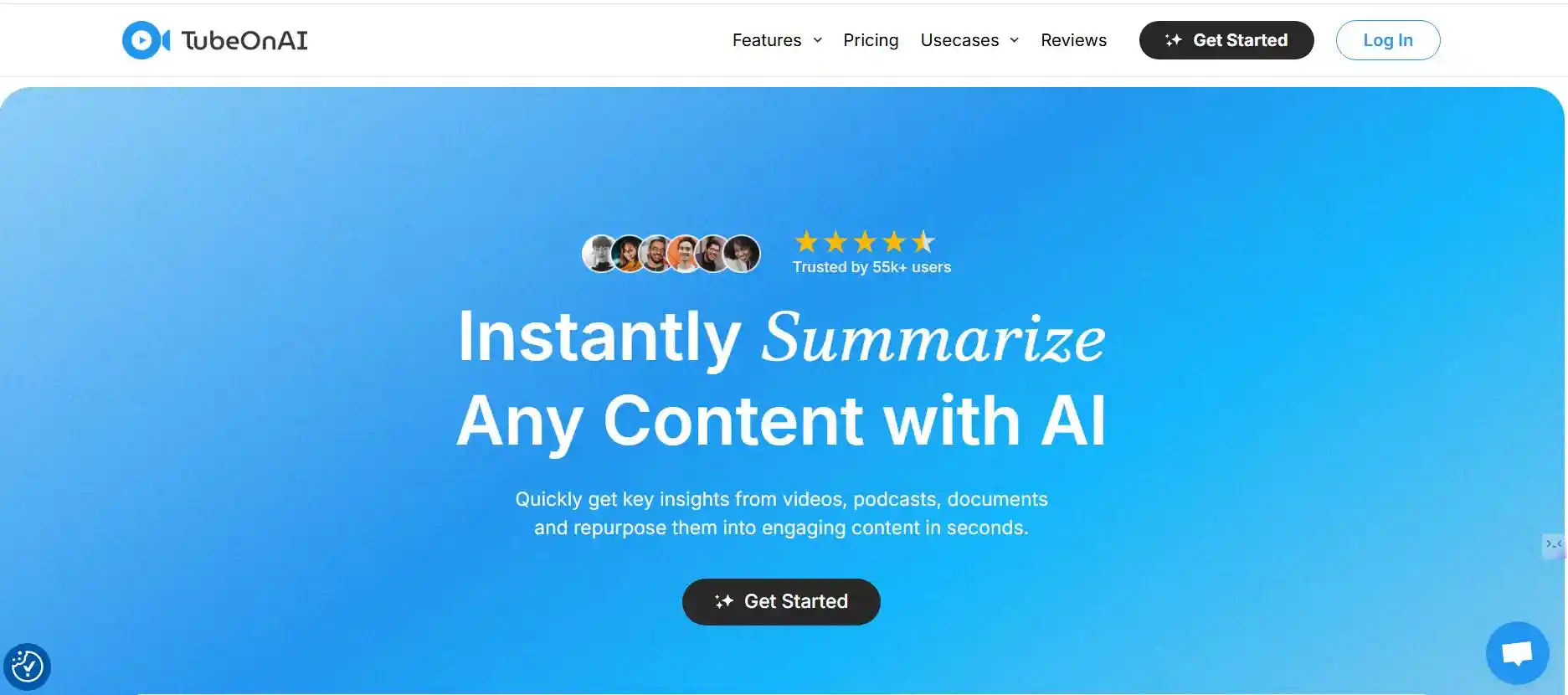
If you use Monica primarily for content summarization and creation, TubeOnAI offers specialized capabilities that go beyond Monica’s text-focused approach. It replaces Monica’s summarization feature with advanced multi-format content processing, particularly excelling where Monica falls short – transforming video and audio content.
TubeOnAI stands out for users who consume and create content from video or audio sources. Instead of a conversational assistant like Monica, TubeOnAI focuses on comprehension and repurposing – turning YouTube videos, podcasts, or articles into structured summaries and even publish-ready blog drafts. It can generate newsletters or post-ready content from long recordings, saving hours of manual effort. For digital marketers, journalists, and educators, it’s a more research-oriented and productivity-focused AI solution than Monica’s chat-first model.
Pros: Summarizes videos, podcasts, and articles; auto-generates blogs and posts; email digest option; multi-modal processing.
Cons: Daily limits on free plan; no offline functionality.
Pricing: Free tier; Premium from around $10/month.
Availability: Web app, iOS and Android app, Chrome extension.
Merlin AI
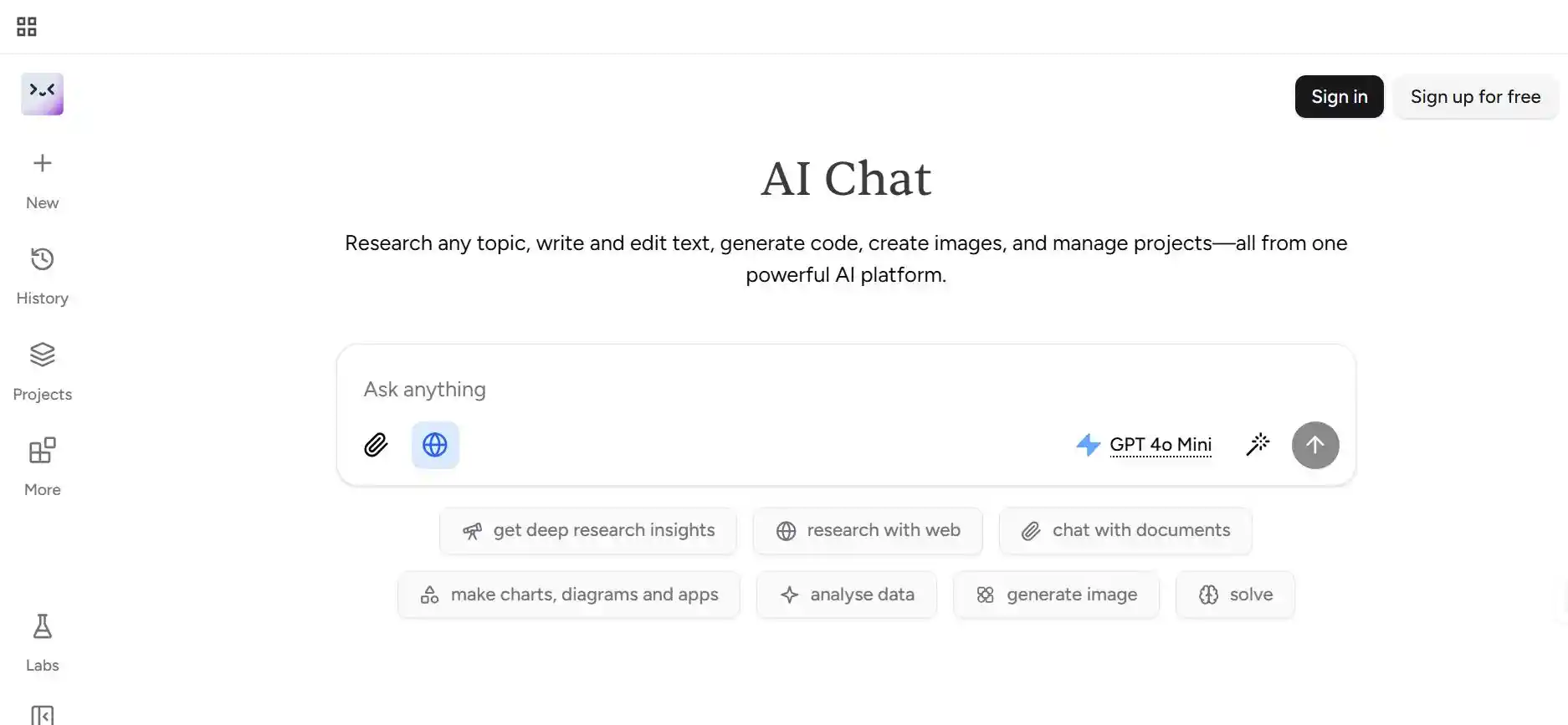
Like Monica, Merlin AI serves as your personal AI assistant for daily tasks, but takes it further with deeper browser integration. While Monica offers chat-based assistance, Merlin becomes your contextual companion across every website you visit, eliminating the need to switch tabs or open separate windows for AI help.
Merlin AI functions as a browser-integrated assistant that enhances your productivity wherever you work online. Unlike Monica, which mainly operates as a chat companion, Merlin embeds directly into Chrome or Edge, allowing you to summarize pages, draft replies, or generate ideas without leaving the tab. It integrates with Gmail, LinkedIn, and YouTube—making it useful for multitaskers who want an on-demand AI helper. Whether you’re summarizing research articles, drafting an email, or creating social captions, Merlin’s context-aware suggestions streamline your workflow.
Pros: Works across websites, fast contextual AI access, integrates with major platforms, supports both chat and command modes.
Cons: Limited offline use; advanced features require subscription.
Pricing: Free plan available; Pro version from $9/month if you choose yearly plan.
Availability: Chrome and Edge extensions, iOS, Android, and Web app.
Sider AI
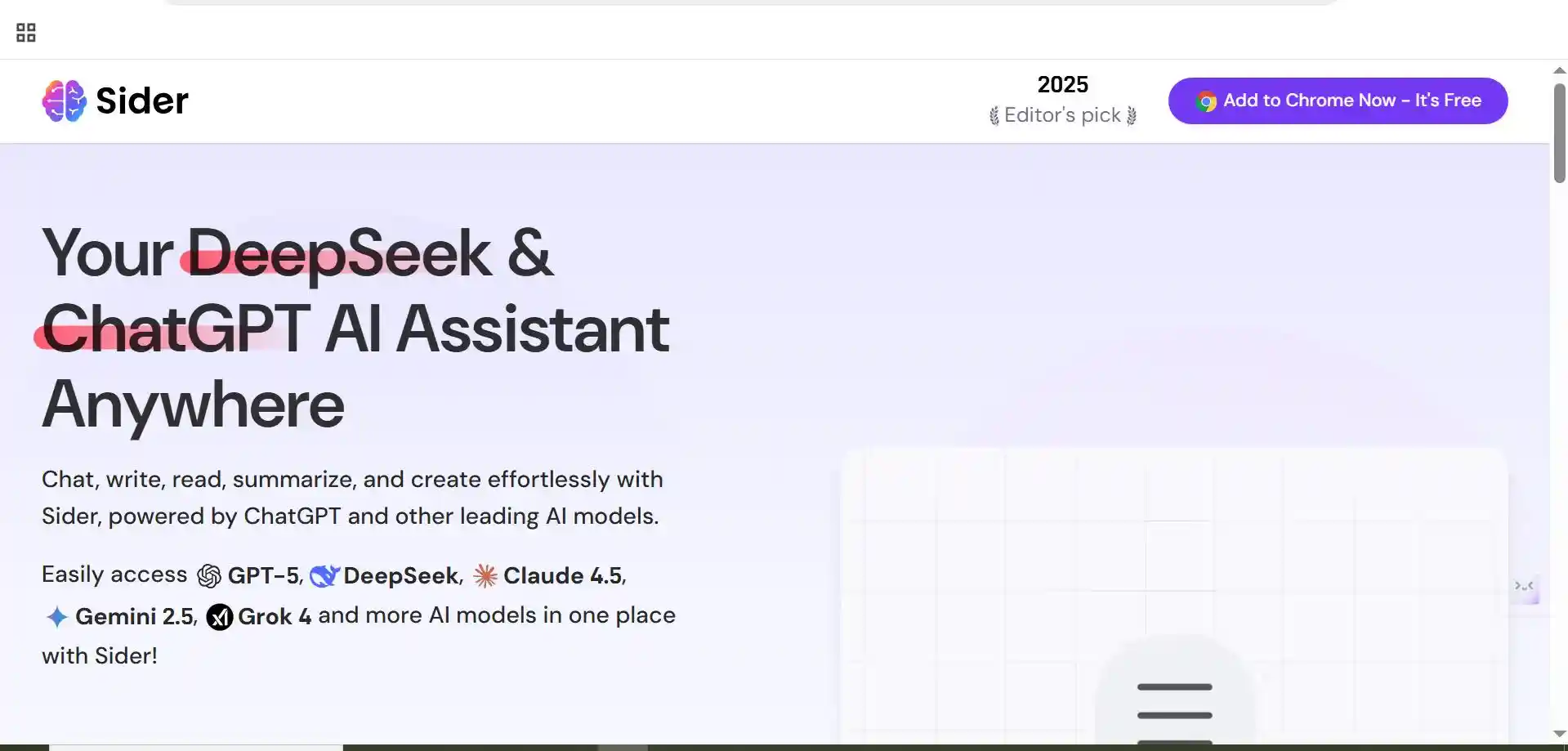
Sider AI directly competes with Monica’s core functionality—providing AI assistance for writing, summarizing, and rewriting, but with superior document handling capabilities. If Monica’s PDF and document processing feels limited, Sider offers a more seamless experience for working with complex documents and web content.
Sider AI is a versatile AI assistant that works alongside you across various apps—offering summarization, translation, rewriting, and chat capabilities directly on web pages. It’s primarily known for its smooth integration with PDF readers, emails, and Google Docs, allowing seamless document summarization or rewriting on the go. While Monica focuses on personal assistance and memory, Sider AI emphasizes practical productivity tools for writers, students, and professionals who frequently handle large amounts of text.
Pros: Works across web apps and documents, includes rewrite/summarize/chat options, and offers a user-friendly sidebar interface.
Cons: Some features require constant login; browser-only support.
Pricing: Free plan; Basic plan starts at $10/month.
Availability: Chrome, Edge, and Firefox extensions, along with iOS, Android, Mac, and Windows apps.

Lumio AI
Lumio AI combines note-taking, content curation, and AI assistance into a single platform. You can save highlights from web pages, PDFs, and documents while Lumio organizes them into visual collections. Unlike Monica, which focuses on communication and brainstorming,
Lumio emphasizes structured knowledge capture. Its AI layer helps summarize, tag, and retrieve content efficiently—ideal for researchers, students, or professionals building knowledge bases.
Pros: Streamlined content organization, AI tagging and summarization, strong educational use case, collaborative collections.
Cons: Limited integrations; slower response time on large collections.
Pricing: To know the pricing, you’ve
Availability: Web, Chrome extension.
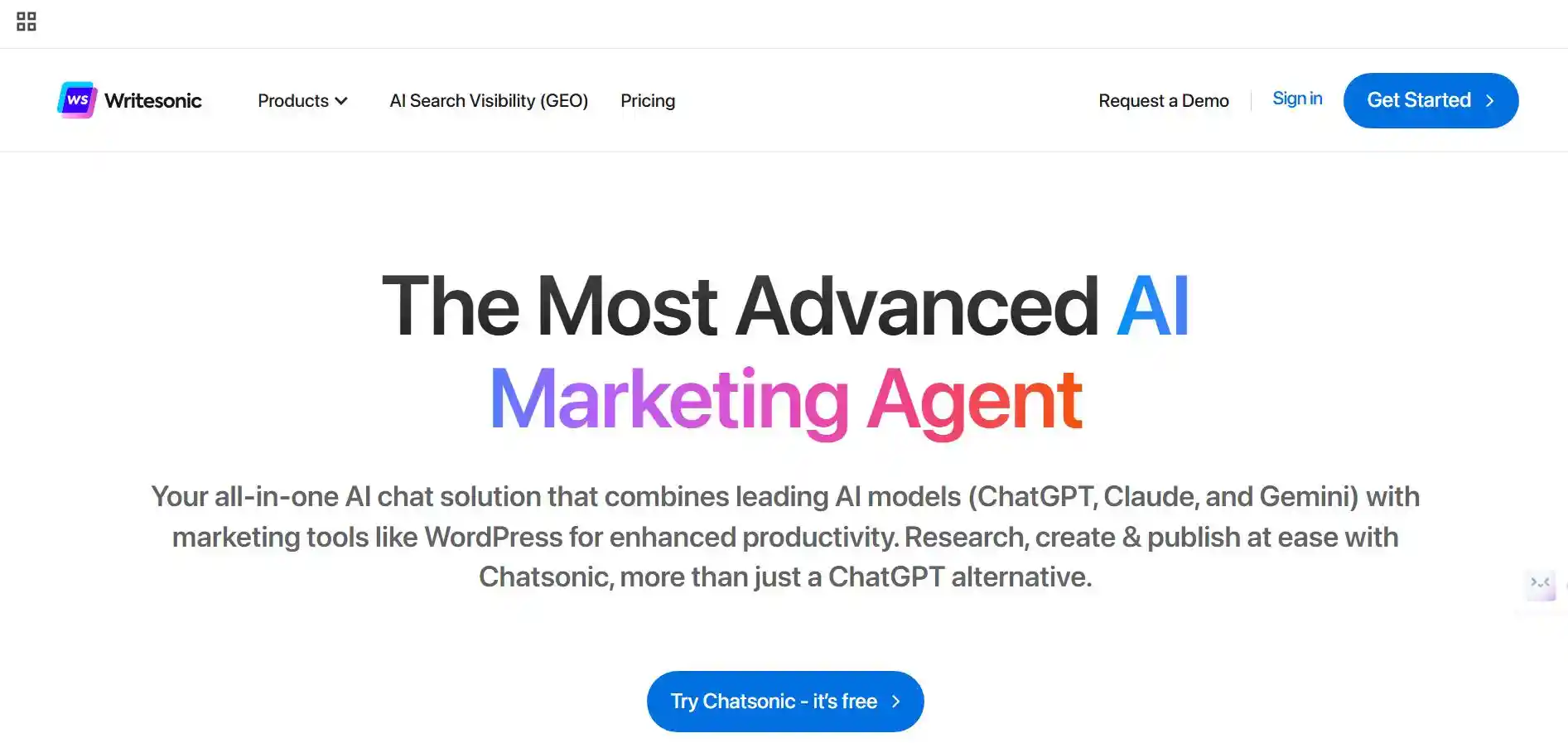
Chatsonic (by Writesonic)
Chatsonic matches Monica’s conversational AI capabilities while adding real-time internet access and multi-modal features that Monica doesn’t offer. For users who find Monica’s knowledge cutoff limiting or need up-to-the-minute information, Chatsonic provides a more current and versatile alternative.
Chatsonic is one of the most comprehensive conversational AI tools on the market, built to rival ChatGPT with real-time web access. It can generate creative text, summarize current events, create visuals, and even voice responses. Unlike Monica, which focuses on personal assistance, Chatsonic functions as both a writer’s co-pilot and research assistant. Its integration with Writesonic’s ecosystem makes it perfect for businesses that want to produce blogs, ads, or emails quickly using AI that stays up to date with live internet data.
Pros: Real-time web access, multi-modal (text, image, voice), wide creative toolset, SEO integration.
Cons: Limited free usage; premium features tied to Writesonic ecosystem.
Pricing: Free trial available; paid plans from $39/month.
Availability: Web, Android app, API.
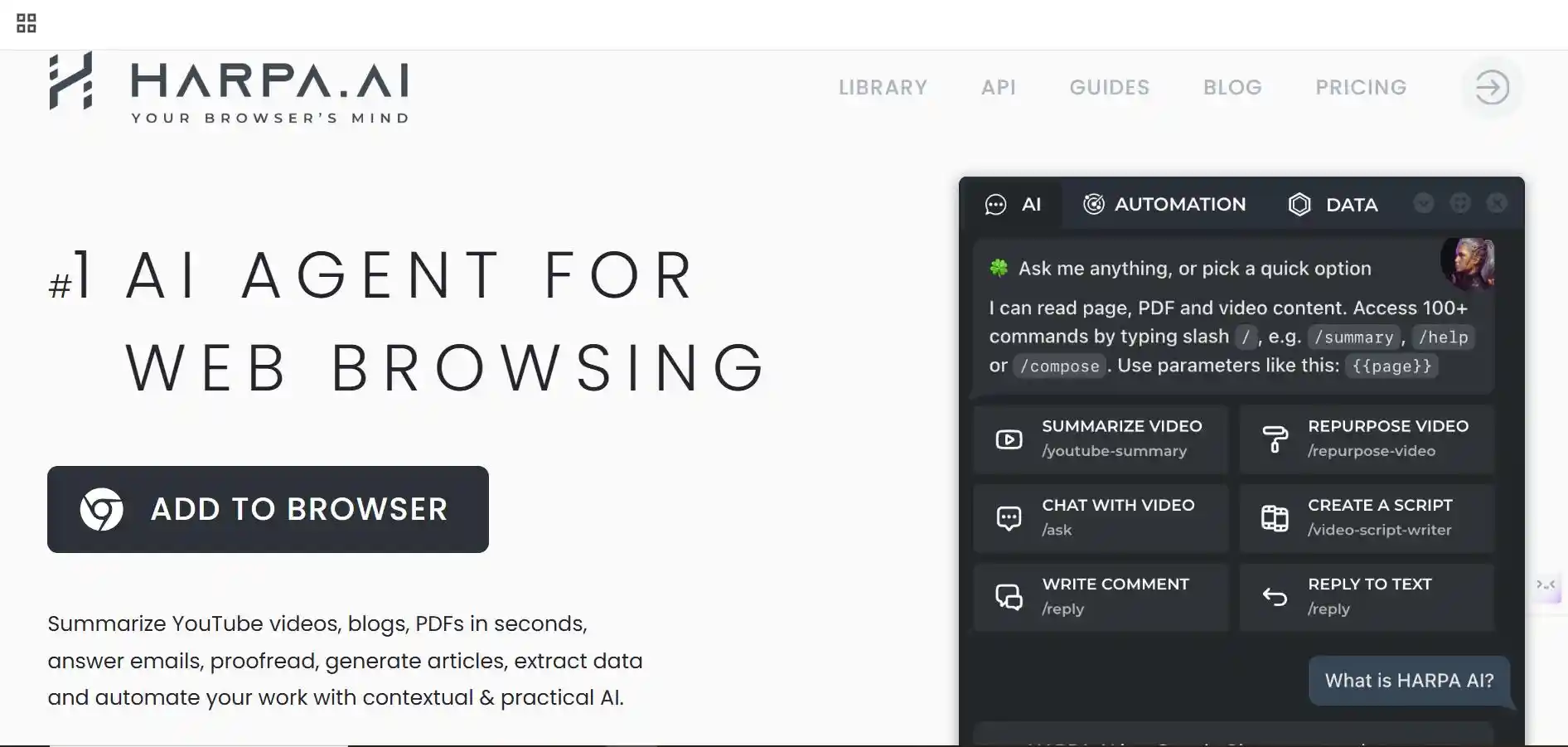
Harpa AI
If you use Monica for research and information gathering, Harpa AI takes these capabilities to the next level with automation. It replaces Monica’s manual assistance with automated workflows, making it ideal for users who need Monica’s helpfulness but with more proactive, automated intelligence.
Harpa AI bridges automation and intelligence. It combines ChatGPT-like capabilities with web automation features such as scraping, searching, or summarizing live data. Unlike Monica, Harpa can perform actions such as monitoring pages, tracking prices, and generating live summaries—all in your browser. It’s a power user’s tool for automating repetitive research or reporting tasks, making it ideal for analysts, marketers, and journalists.
Pros: Automates research tasks, real-time web analysis, powerful browser integration, and privacy-friendly local setup.
Cons: Steeper learning curve; Chrome-only support.
Pricing: Free for most features; Pro (HARPA+GPT-4) from $12/month.
Availability: Chrome extension.
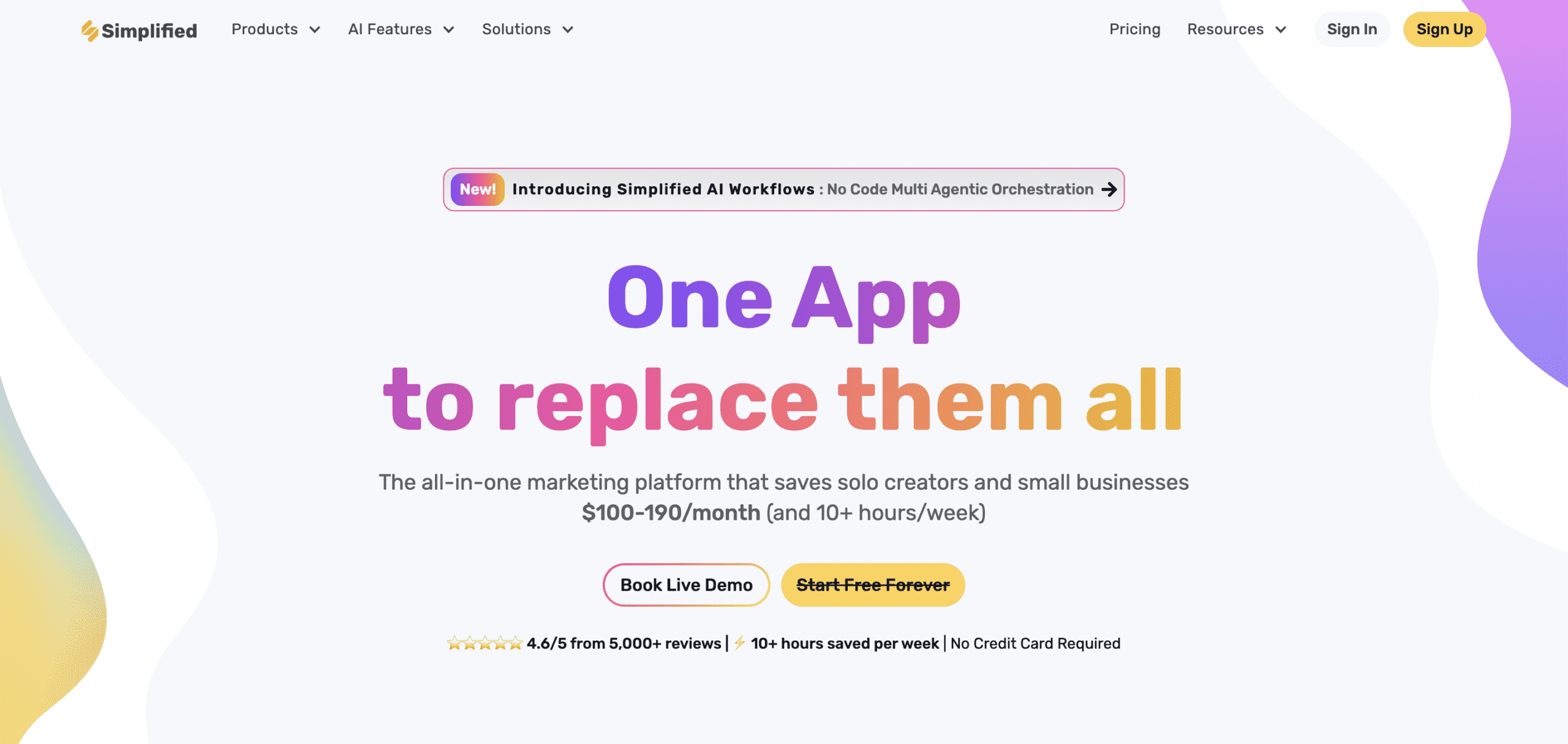
Simplified
For content creators and marketers who use Monica for writing assistance, Simplified offers an expanded creative suite that goes far beyond text. It replaces Monica’s single-purpose writing help with an all-in-one workspace where you can write, design, and publish—eliminating the need for multiple tools.
Simplified is an all-in-one AI platform for design, writing, video editing, and marketing. While Monica focuses on text-based assistance, Simplified empowers teams to ideate, create, and publish content in one place. Its AI Writer generates blogs, ads, and captions, while its graphic and video tools support end-to-end campaign creation. For marketers or creators seeking a collaborative AI workspace rather than a personal assistant, Simplified offers superior versatility.
Pros: Multi-purpose creative suite, strong design + AI writing tools, real-time collaboration, generous free tier.
Cons: Complex interface for new users; some lag on heavy templates.
Pricing: Free plan; Pro from $19/month.
Availability: Web, desktop, iOS, Android and API.
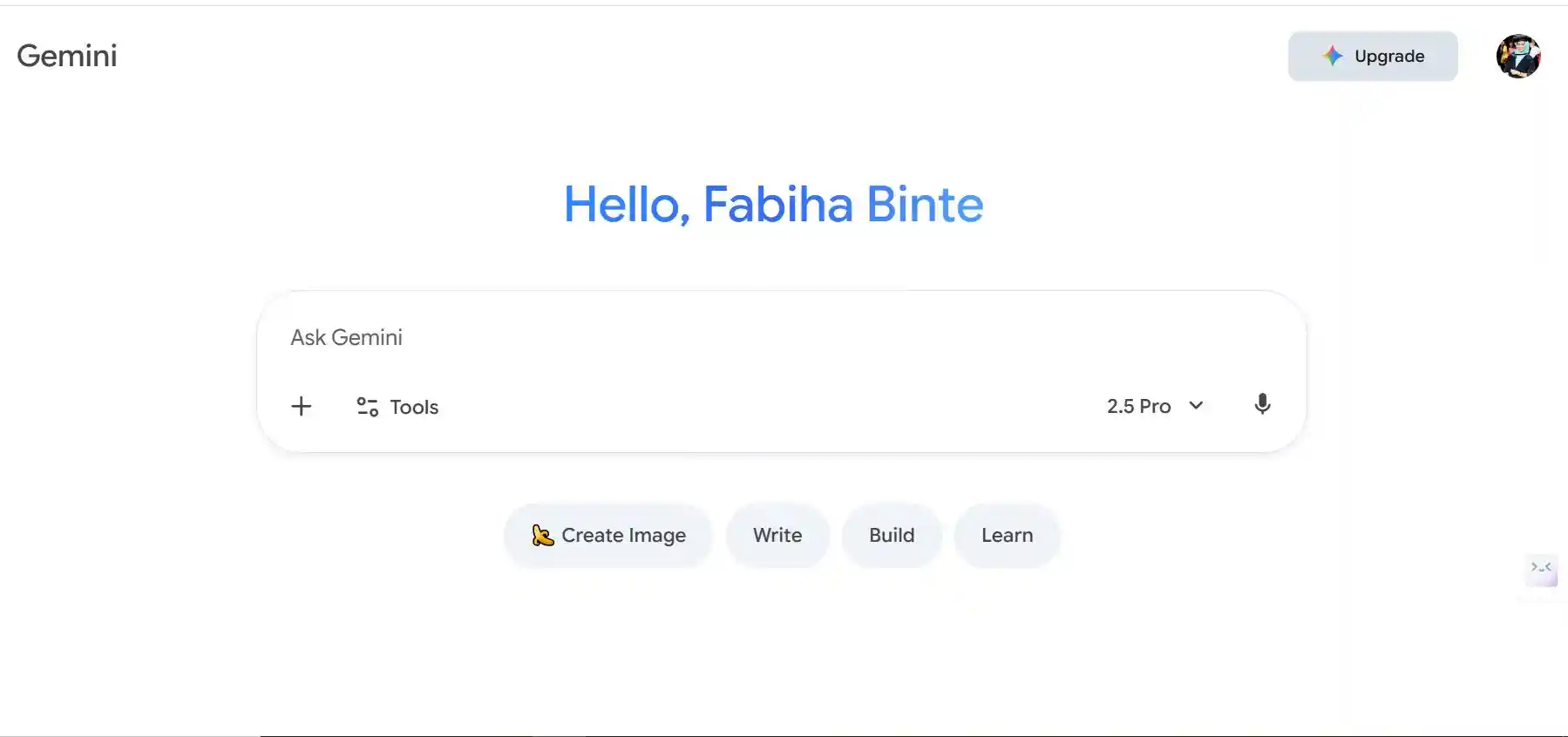
Gemini (by Google)
Gemini serves as a direct replacement for Monica’s conversational AI features with the added advantage of Google ecosystem integration. If you’re a Google Workspace user looking for an AI assistant that understands your emails, documents, and search history, Gemini offers contextual awareness that Monica simply cannot match.
Gemini, formerly known as Bard, is Google’s flagship conversational AI integrated across the company’s ecosystem. Unlike Monica, Gemini can access Google Search, Gmail, and Docs data (with permission), making it a more contextual and research-capable assistant. It supports image understanding, live web browsing, and natural conversation, positioning it as a general-purpose AI assistant for both casual and professional use. For users already embedded in Google Workspace, Gemini offers seamless integration and high reliability.
Pros: Deep Google ecosystem integration, multimodal input (text, image, code), reliable factual grounding, free to use.
Cons: Region-limited rollout; fewer creative options than some dedicated writing AIs.
Pricing: Free; Gemini Advanced (with Gemini 1.5 Pro) from $19.99/month via Google One AI Premium Plan.
Availability: Web, Android, iOS, integrated in Google apps.
Conclusion
Look, any of these tools will get the job done better than sticking with something that’s not working for you. Merlin and Sider are solid if you live in your browser. TubeOnAI saves you from sitting through hour-long videos. Gemini’s free and surprisingly capable for research.
Just pick one, try it for a week, and see if it clicks. That’s really all there is to it.
FAQs
1. What is Monica AI used for?
Monica AI is a personal assistant for summarizing, brainstorming, and daily productivity tasks through conversational AI.
2. Why look for alternatives to Monica AI?
Its usage limits, lack of automation, and limited integrations push users toward more flexible options like Merlin AI or Gemini.
3. Which alternative is best for productivity?
Merlin AI and Sider AI—they work directly inside browsers and handle summaries, writing, and document support efficiently.
4. Which tool summarizes videos or audio best?
TubeOnAI—it turns YouTube videos, podcasts, or lectures into summaries or blog drafts quickly.
5. What’s the best free Monica alternative?
Gemini (by Google) is free, accurate, and deeply integrated with Gmail, Docs, and Google Search.
6. Which integrates best with other platforms?
Gemini syncs with Google Workspace, while Merlin connects with Gmail, LinkedIn, and YouTube.
7. What’s the best overall Monica AI alternative?
TubeOnAI offers the most complete Monica-like experience, with Simplified and Gemini close behind for creators and professionals.