How to Upload a File to AI and Ask Questions About It
Which AI tools let you upload documents and ask questions, what file types and limits they have, how to get accurate answers, and what happens to your files.

Updated
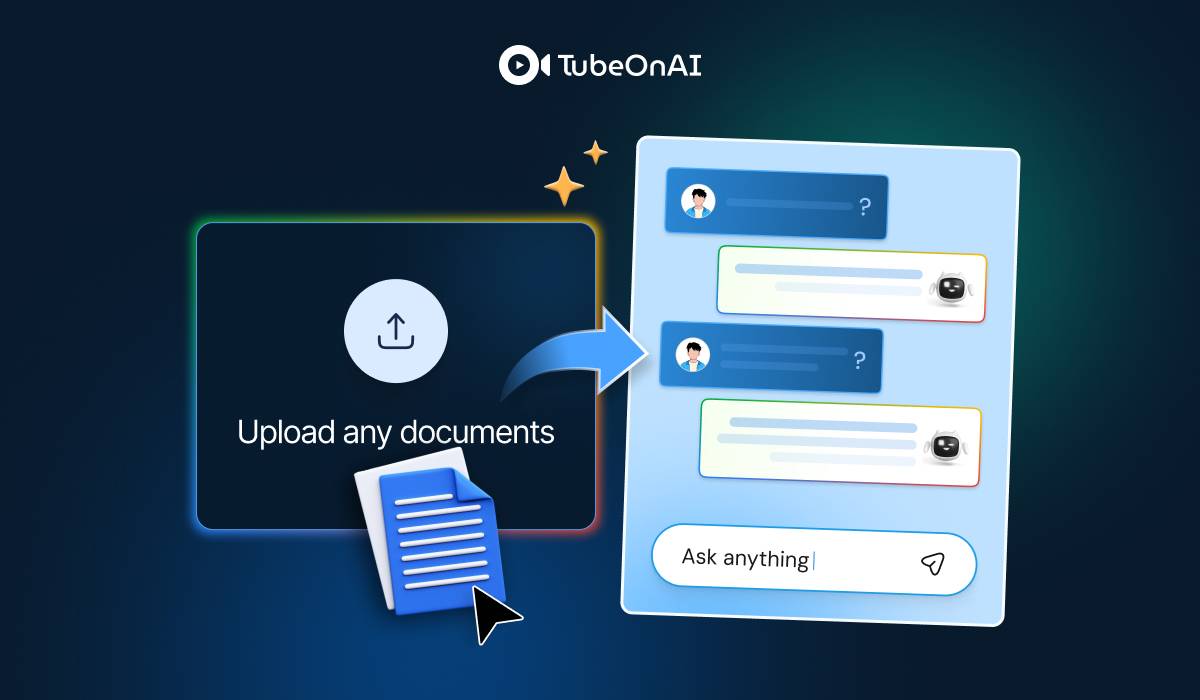
Short answer: ChatGPT, Claude and Gemini all let you upload a document and ask questions about it. Click the + or paperclip icon in the message box, attach your PDF, Word file, spreadsheet or slides, then ask a specific question. For research across many files at once, Gemini Notebook (formerly NotebookLM) keeps dozens of documents in one notebook. If your sources are a mix of documents, videos and podcasts, TubeOnAI lets you summarize any of them and then chat with the result.
The main differences between tools are which file types they accept, how big a file can be, how many uploads you get for free, and what happens to your files afterwards. The table below compares them, using each provider’s help pages as of October 2026.
File Types and Upload Limits by Tool
| Tool | File types | Upload limits | Notes |
|---|---|---|---|
| ChatGPT | DOCX, PDF, TXT; XLSX, XLS, CSV, TSV; PPTX; images; audio (paid plans) | Documents up to 512 MB and 2 million tokens per file; up to 80 files every 3 hours | Free users can upload 3 files a day; audio uploads need a paid plan |
| Claude | PDF, DOCX, CSV, TXT, HTML, ODT, RTF, EPUB, JSON, XLSX (with code execution); JPEG, PNG, GIF, WebP | 500 MB per file, up to 20 files per chat; PDFs over 1,000 pages aren’t accepted | Charts and images in PDFs are read for PDFs up to 100 pages; longer PDFs are read as text only |
| Gemini | “Most file types”, including documents, spreadsheets, images, audio and video | Up to 10 files per prompt; 100 MB per file (2 GB per video) | Video uploads limited to 5 minutes and audio to 10 minutes in total; more with Google AI Pro or Ultra |
| Gemini Notebook (formerly NotebookLM) | PDFs, Google Docs, Slides and Sheets, Microsoft Office files, text, images, audio, ePub, web pages, captioned YouTube videos | Up to 500,000 words or 200 MB per source | 50 sources per notebook and 100 notebooks on the standard tier |
| TubeOnAI | PDFs, Google Docs, Slides and Drive files, web articles, uploaded documents and media, plus YouTube and podcast links | Credit-based | Starter plan is free with 400 credits; paid plans from $9/month |
Dedicated document tools exist too. ChatDOC focuses on chatting with PDFs and also accepts DOC, DOCX, scanned files, EPUB, Markdown, TXT and web pages. Sharly is aimed at researchers: it summarizes and compares documents and links its answers to sources, with citations in APA, MLA or Chicago format.
If your source is a screenshot or photographed page, use the image summarizer. For an original slide deck, the PowerPoint-to-notes workflow explains how to upload PPT or PPTX files and review the result.
Which to pick:
- One file, quick questions: ChatGPT, Claude or Gemini, whichever you already use.
- Many documents for one project: Gemini Notebook, which answers across all the sources in a notebook.
- Documents plus videos and podcasts: TubeOnAI, which summarizes all of them in one place and lets you ask follow-up questions about each summary.
How to Chat with a Document Using TubeOnAI
Here’s how it works in TubeOnAI. For a full overview of the chat feature, see the Ask Follow-Ups page.
Step 1: Sign Up for TubeOnAI
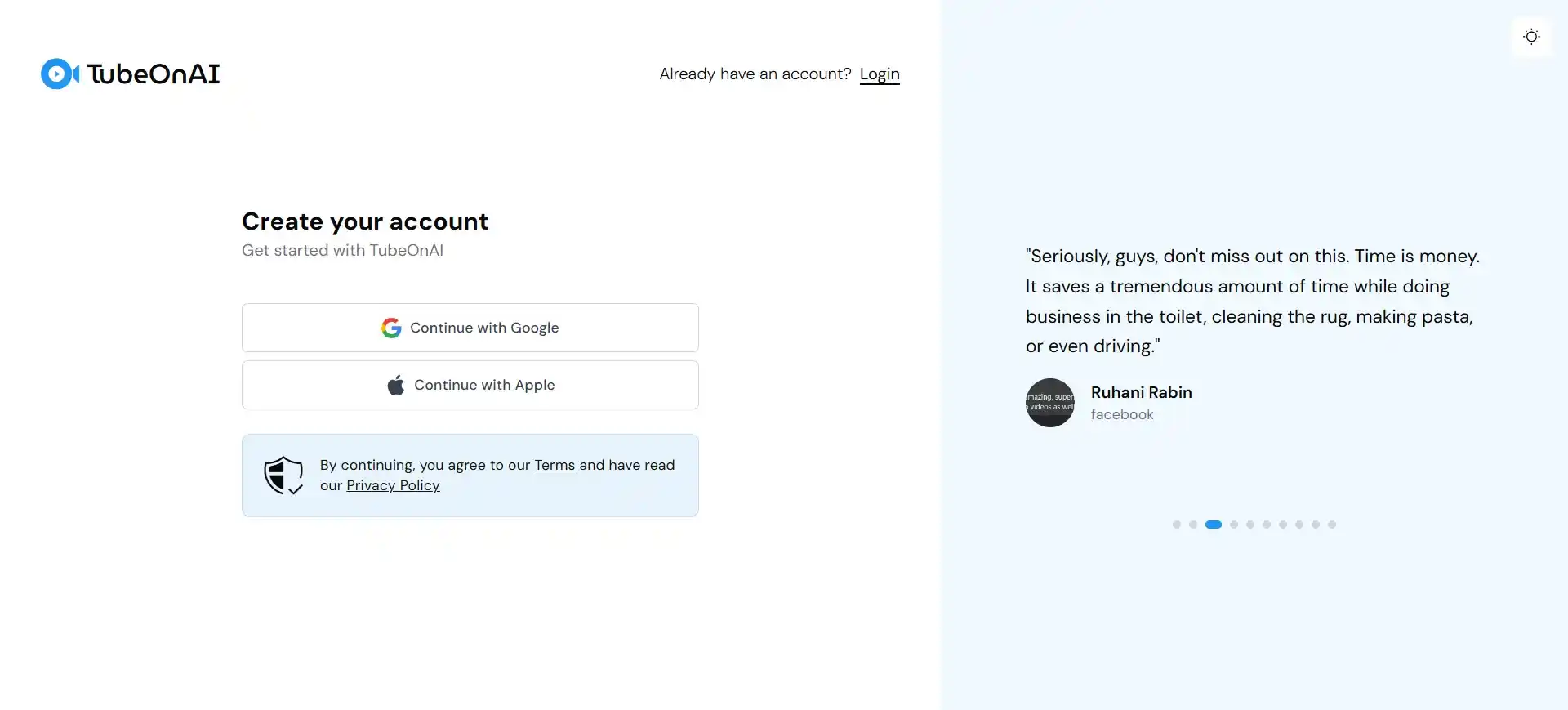
Start by visiting the TubeOnAI website and create an account. The Starter plan is free.
Step 2: Upload Your Document or Provide a Link
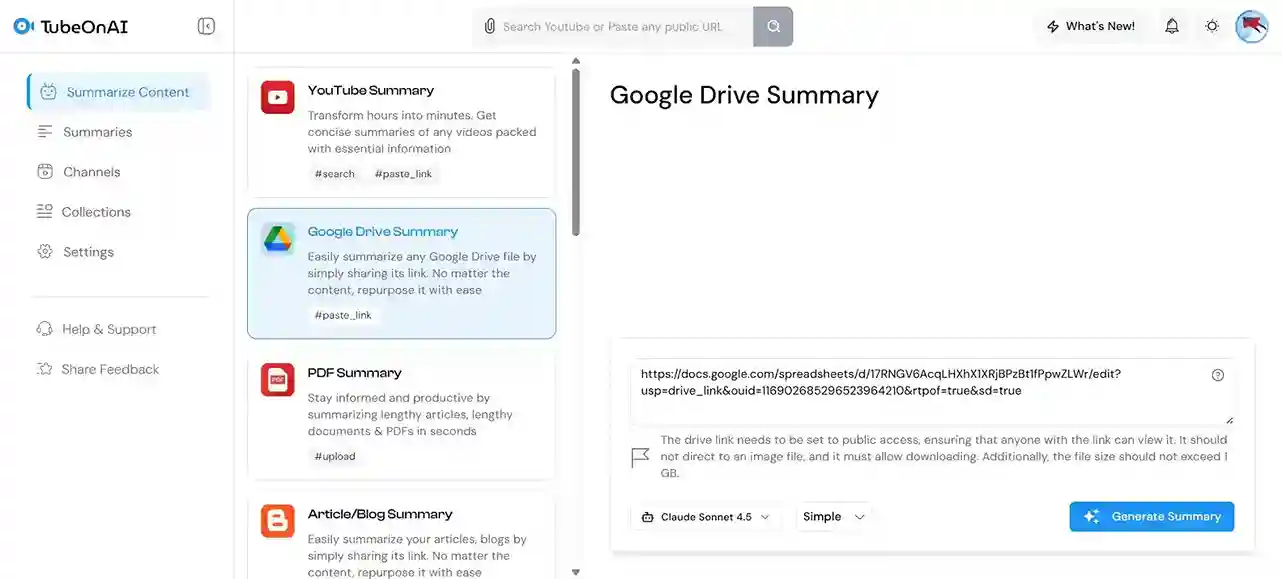
Once you’re logged in, look for the “Attachment” symbol on the left side of the search bar. Click it to upload a file from your computer or phone. If your document is online, such as a Google Doc or a PDF in Google Drive, you can paste the link instead.
Then click the “Summarize” icon.
Step 3: Ask Questions in the Chat Interface
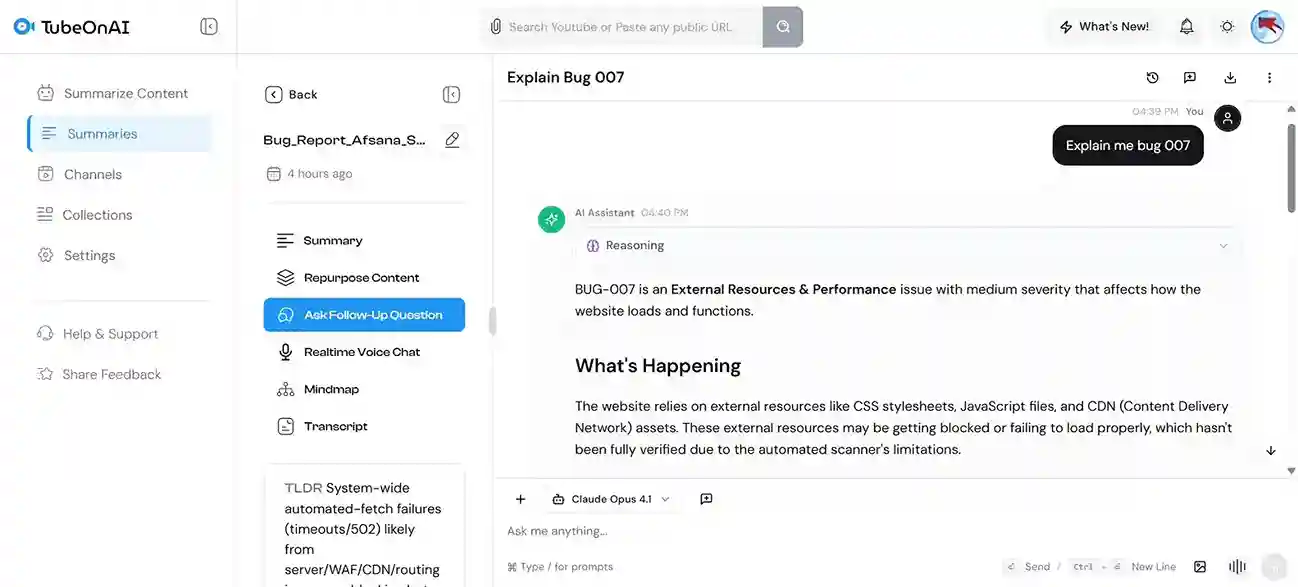
After your document is summarized, click “Ask Follow Up Question” on the right side of the horizontal navigation bar. A chat box will appear, as shown in the image.
Type your question about the document, for example “What are the key points?”, “What does section 3 say about pricing?” or “List every deadline mentioned”.
Step 4: Read the Answer
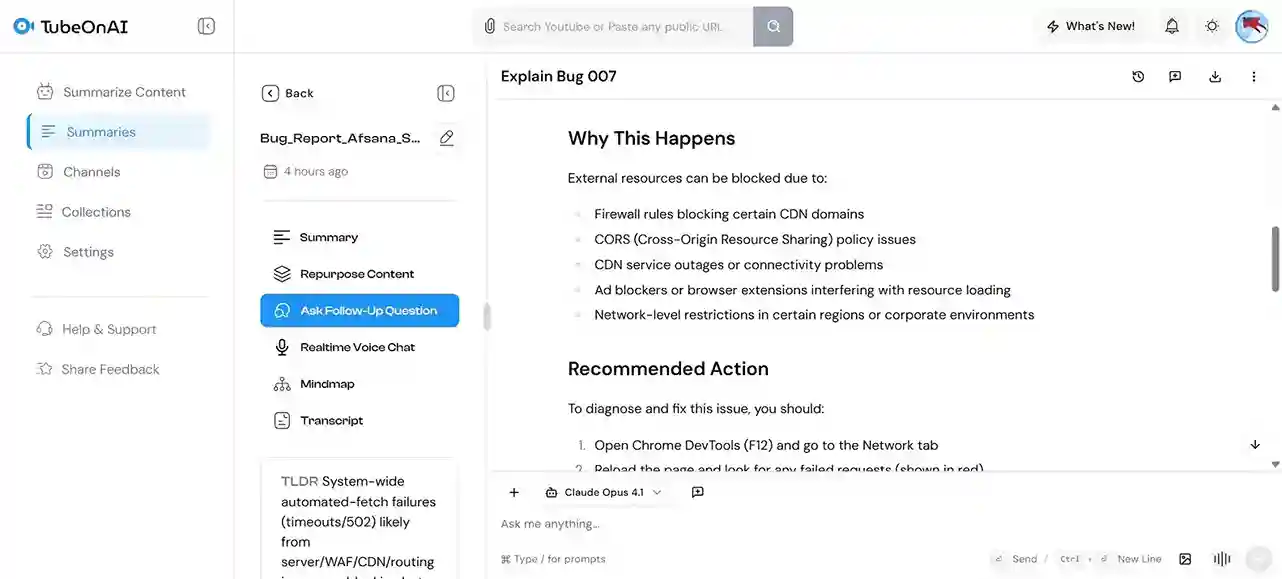
The answer is based on the content of your document. Check anything important against the original file before you rely on it.
Step 5: Refine Your Questions
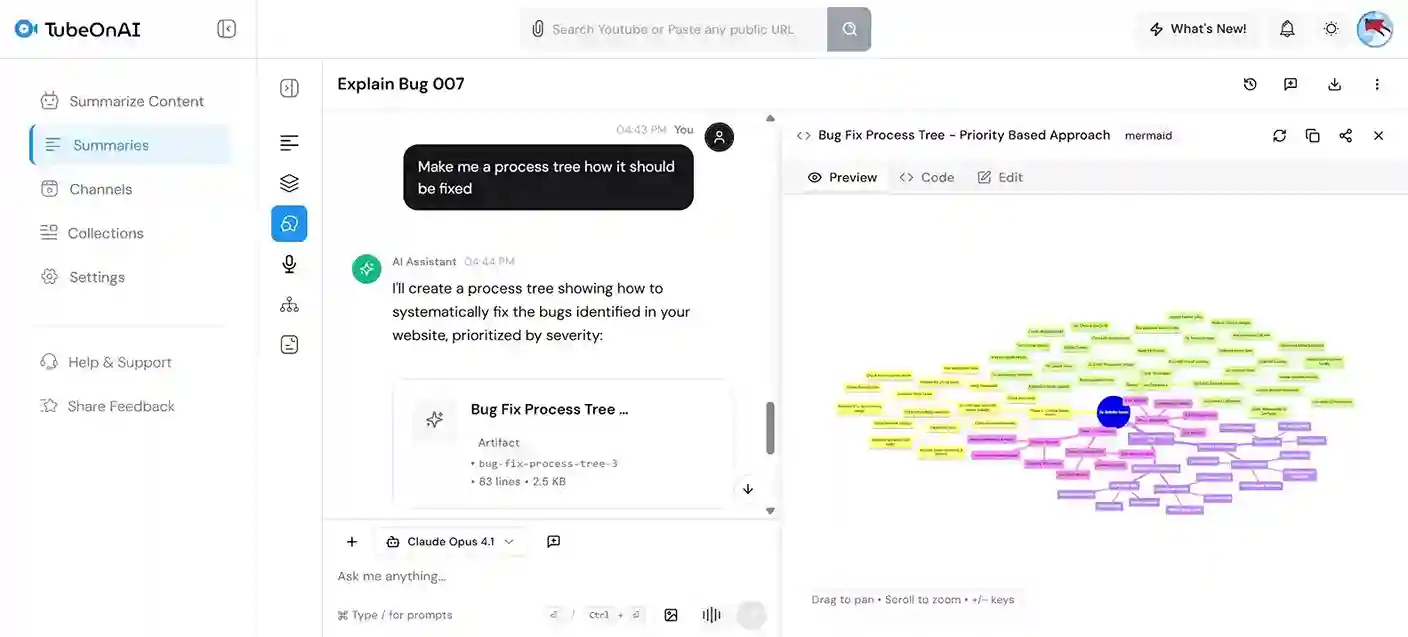
If the answer isn’t what you need, ask a narrower question or ask the AI to explain part of its answer. Specific questions get more precise answers.
How to Get Accurate Answers From Your Files
Whichever tool you use, these habits make the answers more reliable:
- Ask specific questions. “What were the three main risks in the 2025 report?” works better than “Tell me about this file”.
- Ask where the answer comes from. Request the page, section or a short quote, then check it in the document.
- Use text-based files where you can. A scanned PDF is an image of text. Some tools read it, but a searchable PDF or Word file gives more dependable results.
- Split very long files. If a tool says a file is too large, or answers seem to ignore later sections, upload chapters or sections separately.
- Verify before you act. AI can misread tables, mix up figures or fill gaps with plausible guesses. Treat answers as a starting point, especially for contracts, finances or health.
What Can You Do with an AI Document Chat?
You can chat with PDFs, Google Docs, slides and spreadsheets. Students can find information for assignments quickly, researchers can analyze papers faster, and professionals can review reports. Common uses:
- Quick information retrieval: find a detail in a long report without scrolling through it.
- Answering specific questions: ask about one clause in a contract or one result in a research paper.
- Summarizing key points: get the main ideas of a complex document first, then read the parts that matter.
- Comparing documents: tools that accept several files at once (such as Claude, Gemini Notebook or ChatGPT) can point out similarities and differences.
- Translating and explaining: ask for a plain-language explanation of jargon, or a summary in another language. TubeOnAI translates summaries into 30+ languages.
TubeOnAI also offers a free PDF summarizer tool if you only need a quick summary.
Is It Safe to Upload Files to AI?
It depends on the tool, your plan and your settings. Before you upload anything sensitive, check how the provider uses your data:
- ChatGPT: on personal Free, Plus and Pro accounts, the Improve the model for everyone setting is on by default, which means new conversations can be used to train OpenAI’s models. You can turn it off in Data Controls and keep your chat history.
- Claude: consumer chats (Free, Pro, Max) are used to improve models if you allow it in Privacy Settings. Incognito chats are not used for training whatever that setting is.
- Gemini: Google says human reviewers read some Gemini chats and asks users not to enter confidential information they wouldn’t want a reviewer to see. You can review, delete and control activity in Gemini Apps Activity.
- TubeOnAI: see our privacy policy.
As a rule, don’t upload confidential client files, personal data or anything covered by a non-disclosure agreement to a personal AI account. If your company has a business or enterprise plan, use that, and follow its policy.
Closing Words
Uploading a file and asking questions is often faster than reading a long document end to end, as long as you check the answers that matter. Pick the tool that fits your files: a general assistant for one document, a notebook tool for a stack of research, or TubeOnAI if you also need to summarize Word documents, videos and podcasts and chat with the results.
FAQs
Which AI lets you upload documents and ask questions?
ChatGPT, Claude and Gemini all accept document uploads, with limits that depend on your plan. Gemini Notebook (formerly NotebookLM) is built for asking questions across many documents, and tools such as TubeOnAI, ChatDOC and Sharly also let you chat with uploaded files.
Can I upload files to ChatGPT for free?
Yes. OpenAI’s help center says Free users can upload documents, spreadsheets, presentations and images, limited to 3 file uploads per day. Audio uploads require a paid plan.
How does AI handle technical or industry-specific jargon?
Large AI models handle most specialized terminology well, but they can still misread it. For highly technical documents, ask the AI to define the terms it uses and check its explanations against the document or a trusted reference.
Can AI document chat replace reading the document?
Not entirely. It is best used to find information and get oriented quickly. For decisions, contracts or anything you will be held accountable for, read the relevant sections yourself.
How accurate are AI answers about documents?
They are usually reliable for straightforward questions about clear, text-based documents, and less reliable for tables, scanned pages and questions that require reading between the lines. Ask for the page or quote behind each answer and check it.
Can these tools help with writing or brainstorming?
Yes. Once a document is uploaded you can ask for an outline, a draft email based on it, or ideas drawn from its content. In TubeOnAI, you can also turn a summary into a blog post, newsletter or social post with its repurposing templates.