Veritasium Video Summaries
Curious about the cosmos, quantum physics, or the human mind? Veritasium has the answers. Explore concise summaries of Derek Muller's mind-bending videos, powered by TubeOnAI. To help you get the most out of his videos, we've created a collection of concise summaries that highlight the key takeaways from each episode.
12 episode summaries on this page
Best Veritasium Summaries
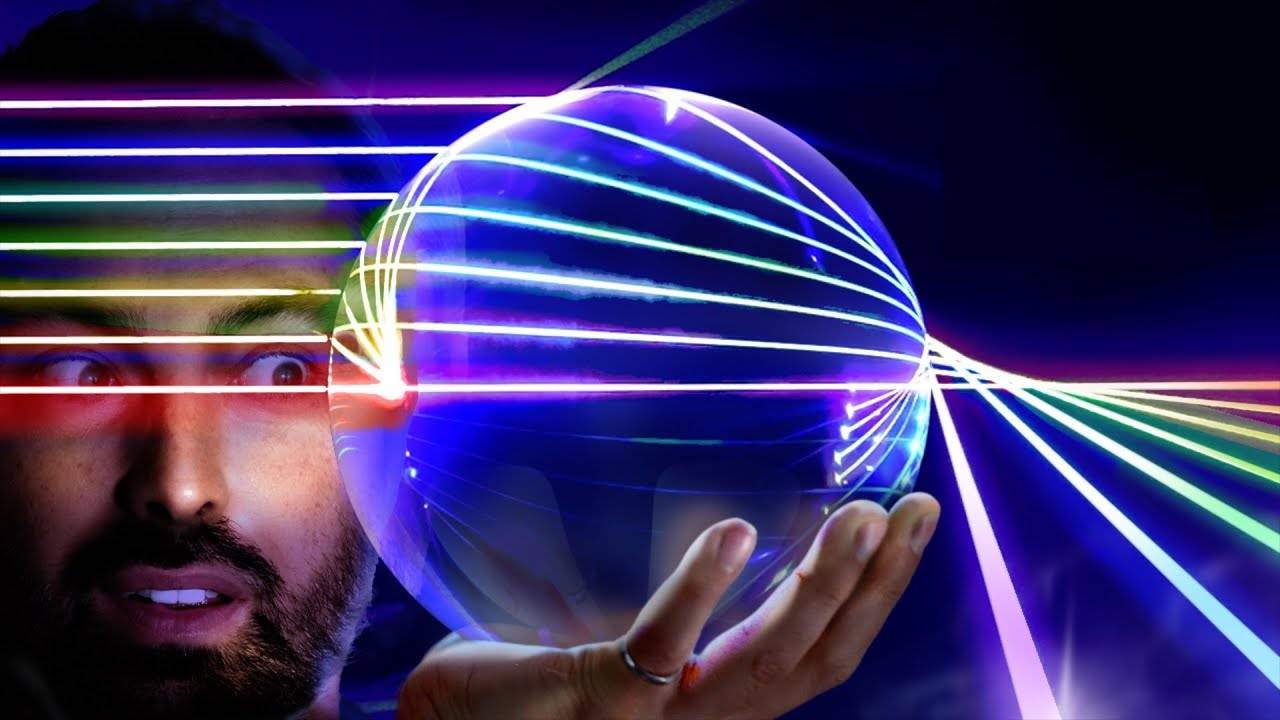
Most People Don't Understand Rainbows
Rainbows are curved optical phenomena resulting from the refraction and reflection of light in raindrops, with visibility dependent on the observer's angle, and can manifest in various forms such as double rainbows and glories.
- Understanding Rainbows
- Rainbows are curved due to the angle of light refraction and reflection within raindrops. A single raindrop creates a cone of light that produces a rainbow effect, with different colors emerging at specific angles.
- Key Optical Phenomena
- Light entering a raindrop slows down and bends due to refraction; some light reflects off the back surface, contributing to the rainbow's appearance.
- Color Dispersion
- The maximum scattering angle for red light is about 42°, while for blue light, it's closer to 40°.

Simplest Math Problem No One Can Solve
The video explores the perplexing Collatz Conjecture, a mathematical problem involving the behavior of positive integers under simple rules, and delves into the challenges of proving or disproving it, the potential implications, and the parallels with other mathematical concepts.
- Collatz Conjecture
- The Collatz Conjecture involves a simple iterative process applied to positive integers: if odd, multiply by three and add one; if even, divide by two.
- Historical Context
- Proposed by Luther Collatz in the 1930s, it has various names including the Ulam conjecture and 3N+1 problem. Famous mathematician Paul Erdős remarked, "Mathematics is not yet ripe enough for such questions."
- Hailstone Numbers
- The numbers generated by the Collatz process are termed hailstone numbers, as they rise and fall before reaching one. For example, starting with 27 leads to a peak of 9,232 before settling to one, taking 111 steps in total.

Why It Was Almost Impossible to Make the Blue LED
The development of blue LEDs, spearheaded by Shūji Nakamura in the 1990s, revolutionized lighting technology, enabling the creation of white light and earning him a Nobel Prize
- The Birth of the LED
- First Visible LED: Created by Nick Holonyak in 1962, it glowed faint red. Green LED: Developed by Monsanto shortly after, but the quest for blue LEDs began.
- Challenge of Blue LEDs
- Industry Race: Major companies like IBM, GE, and Bell Labs invested heavily but failed for decades. Importance of Blue: Blue LEDs were crucial for creating white light by mixing red, green, and blue.
- Shūji Nakamura
- Nakamura's Background: Worked at Nichia, a struggling chemical company, and faced skepticism from superiors.
More Veritasium Summaries
What Actually Happened To Amelia Earhart?
July 2, 1937, Earhart faced dire circumstances as her fuel was running low while flying over the Pacific Ocean. Earhart's route was the longest, following a path close to the Equator, making her final leg to Howland Island particularly challenging.
Read Full SummaryOn These Questions, Smarter People Do Worse
Research indicates that for specific problems, higher intelligence correlates with poorer performance. The study involves a fictitious skin cream experiment where participants' reasoning about the results varies based on their numeracy skills.
Read Full SummaryHow do QR codes work? (I built one myself to find out)
The speaker initially viewed QR codes as ugly and meaningless, preferring direct website links. They believed QR codes were a language for machines, not for humans. QR codes have become ubiquitous, used in various applications like tickets, menus, and advertising.
Read Full SummaryWe Might Find Alien Life In 2299 Days
Europa's surface has few craters, suggesting geological activity that could erase impacts Evidence suggests a salty ocean beneath a thick ice crust, possibly containing twice the amount of water found on Earth.
Read Full SummaryWhy Democracy Is Mathematically Impossible
Democracy may be fundamentally flawed: The methods used for electing leaders are described as "fundamentally irrational" and mathematically problematic. Used in 44 countries, including the U.S. and the U.K., it often results in a party winning without majority support.
Read Full SummaryWhat Everyone Gets Wrong About Planes
No keys or sensors: Plane doors can be opened if someone pulls the lever, but this is extremely rare in-flight. Self-preservation and common sense: Most passengers understand the dangers of opening a door at altitude.
Read Full Summary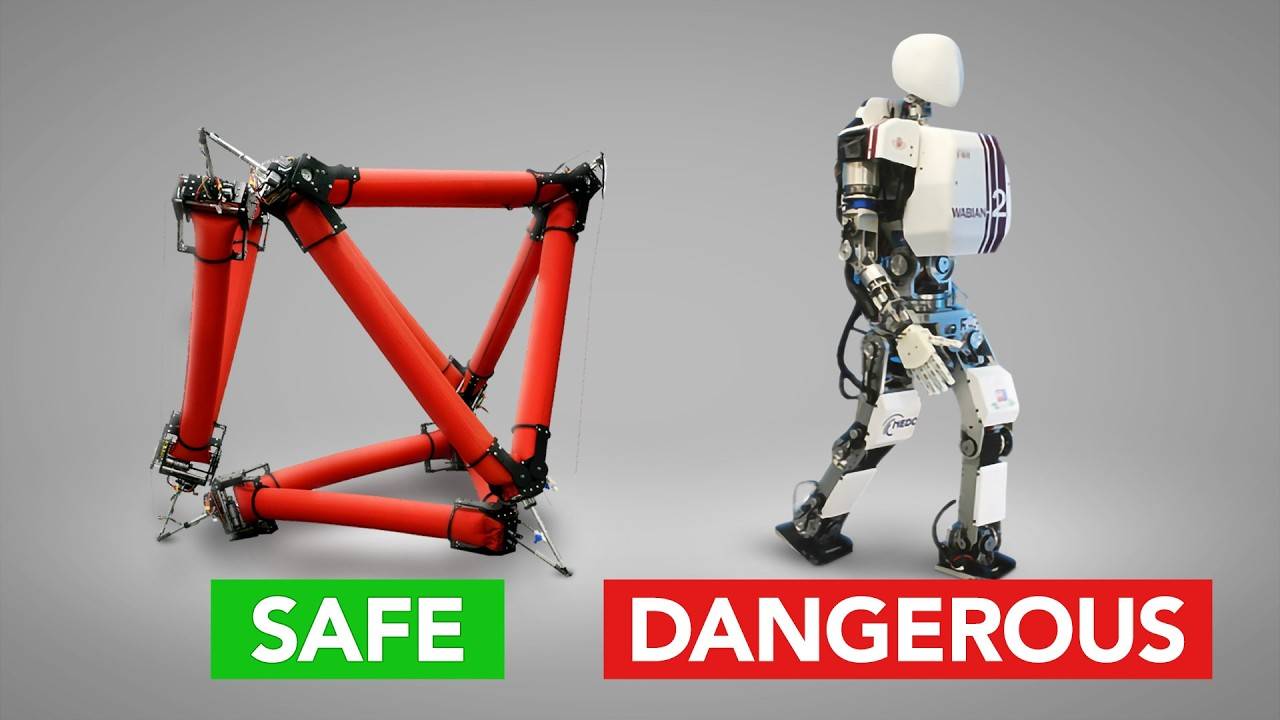
Real Reason Robots Shouldn’t Look Like Humans
Future robots are expected to be soft, flexible, and adaptable for safer human interaction. Inspired by characters like Baymax from "Big Hero 6," these robots will differ from the metallic, humanoid figures like those from Boston Dynamics.
Why is this number everywhere?
The YouTube video delves into the pervasive presence of the number 37 in various aspects of life. Through interactions with people randomly selecting numbers, investigations into psychological phenomena like the blue-seven phenomenon, and mathematical analyses
Read Full SummaryThe Oldest Unsolved Problem in Math
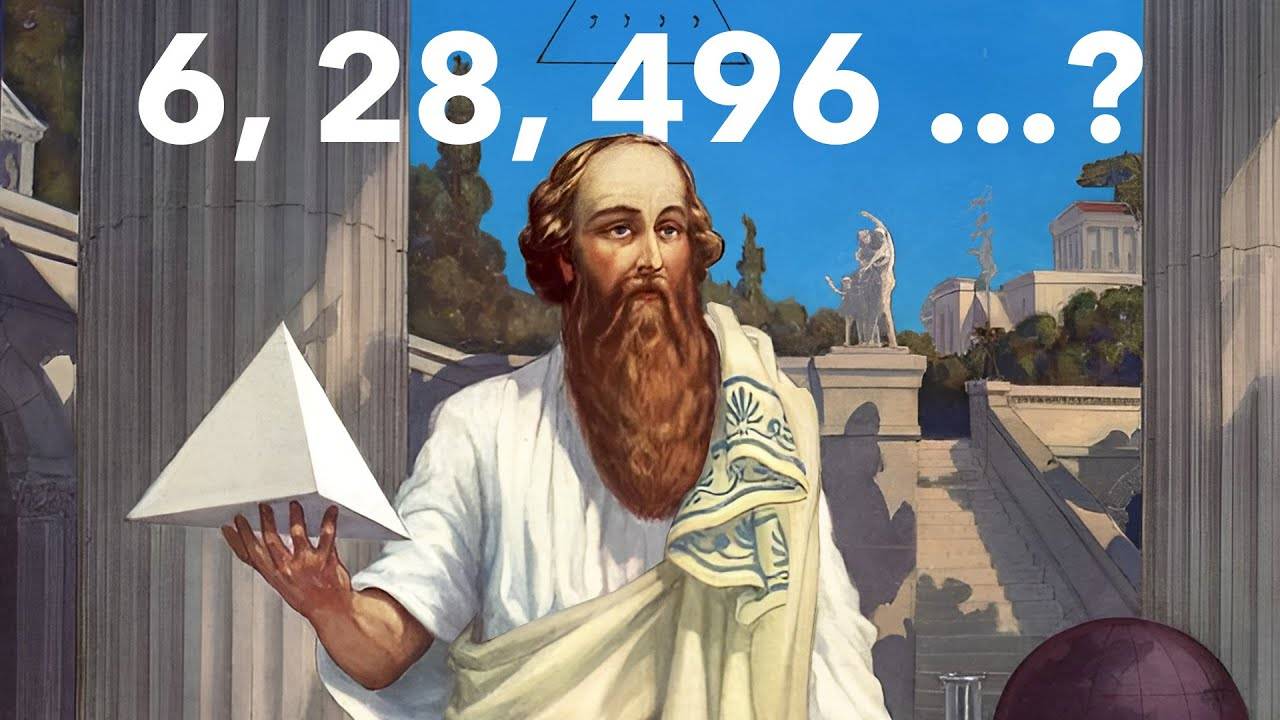
The video delves into the oldest unsolved problem in mathematics, spanning 2000 years, revolving around odd perfect numbers. It explores the historical pursuit of understanding perfect numbers, the contributions of prominent mathematicians like Euclid and Euler, he role of Mersenne primes
Read Full Summary


How To Summarize Veritasium Videos
Solution
Use AI Summarizer
TubeOnAI offers a YouTube summary feature that allows you to summarize your favorite Veritasium videos by simply pasting a link or searching the title.
Learn MoreLogin to TubeOnAI
Quickly log in or create a new TubeOnAI account.
Try for freeSearch & Summarize
Now search for your Veritasium videos via our search bar or directly paste the link and click "Summarize."
Try for freeListen, Translate & more
Now enjoy reading the summaries or simply translate them into over 30 different languages and listen on the go.
Try for free
Frequently Asked Questions
Got questions? We’ve got answers.
What is Veritasium?
Veritasium is a popular YouTube channel hosted by Derek Muller, focusing on science and technology. The channel explores a wide range of topics, from physics and chemistry to artificial intelligence and psychology.
How can these summaries help me?
Veritasium video summaries offer several benefits:
- Save time: Quickly grasp the main ideas without watching the entire video.
- Enhance learning: Reinforce your understanding of the topics covered.
- Review key points: Refer back to the summaries to refresh your memory.
- Spark curiosity: Discover new topics and interests.
How can I provide feedback on the summaries?
We welcome your feedback on the summaries. Please use the feedback form on the page or contact us directly.
Are these summaries accurate and reliable?
The summaries are generated using advanced AI techniques to ensure accuracy and reliability. However, it’s always recommended to watch the original video for a deeper understanding and additional context.