AI Lesson Planning: Which Free Tools Write Usable Plans?
Which free AI lesson planners actually produce a usable, standards-aligned plan, what their free tiers include, and how to check the result before you teach it.

Updated

If you want an AI tool that writes a complete lesson plan for free, start with a teacher-specific planner: MagicSchool, Khanmigo for Teachers, Eduaide.ai or Brisk Teaching. They ask for grade, subject and objective and return a structured plan with objectives, activities and an assessment. General chatbots like ChatGPT, Gemini and Claude can do the same job, but only if you give them the standard and the structure yourself. Whichever you use, check the plan before you teach it.
Artificial intelligence won’t replace your judgement about your own class. It does cut the blank-page part of planning: the first draft, the differentiated versions, the exit ticket, the rubric. Below is what each tool’s free tier actually gives you (checked October 2026; education AI tools change their plans often), how to get a standards-aligned plan out of them, and a few non-AI tools for the rest of your prep time.
Free AI Lesson Planners Compared
| Tool | Built for teachers? | What’s free (as of October 2026) | Standards alignment |
|---|---|---|---|
| MagicSchool | Yes | Free plan with 80+ teacher tools, including a lesson plan generator. Plus costs $12.99/month, or $8.33/month billed annually, and adds unlimited generations | Not listed on its pricing page. Type the standard into your request |
| Khanmigo for Teachers | Yes | Free for teachers (availability depends on your country) | Yes, it advertises standards-aligned lesson planning |
| Eduaide.ai | Yes | 8 resources a month (24 credits), no card needed. Pro costs $49.99/year | Yes, standards from 50+ jurisdictions (Common Core, NGSS, state standards). The free plan limits how much standards input you can add |
| Brisk Teaching | Yes, a Chrome and Edge extension | Free teacher plan: 20+ tools, unlimited usage | “Standards-aligned outputs” are listed on the paid school and district plan |
| ChatGPT for Teachers | A teacher workspace in ChatGPT | Free for verified U.S. K–12 educators (currently through June 2028) | You supply the standard in your prompt |
| Gemini in Classroom | Yes, built into Google Classroom | Available on Google Workspace for Education Fundamentals, Standard and Plus | You supply the standard in your prompt |
| Claude / Gemini app | No, general assistants | Free plans with usage limits | You supply the standard in your prompt |
Quick picks:
- You want a full plan with the least effort: MagicSchool or Khanmigo.
- Your district names specific standards (Common Core, NGSS, a state framework): Eduaide.ai or Khanmigo, since both advertise standards selection.
- You already plan in Google Docs and Slides: Brisk, or Gemini in Classroom if your school has it.
- You teach in a U.S. K–12 school: verify your account for ChatGPT for Teachers. It’s free and gives you a dedicated school workspace.
Teacher-Specific Lesson Plan Generators
These tools are built around teaching tasks, so you fill in a form (grade, subject, objective, length) instead of writing a long prompt.
MagicSchool.ai
MagicSchool is the broadest of the teacher toolkits. Its free plan includes 80+ teacher tools: a lesson plan generator (“generate a lesson plan for a topic or objective you’re teaching”), plus quizzes, worksheets, rubrics, IEP drafts and a presentation generator. Its Raina chatbot is also included.
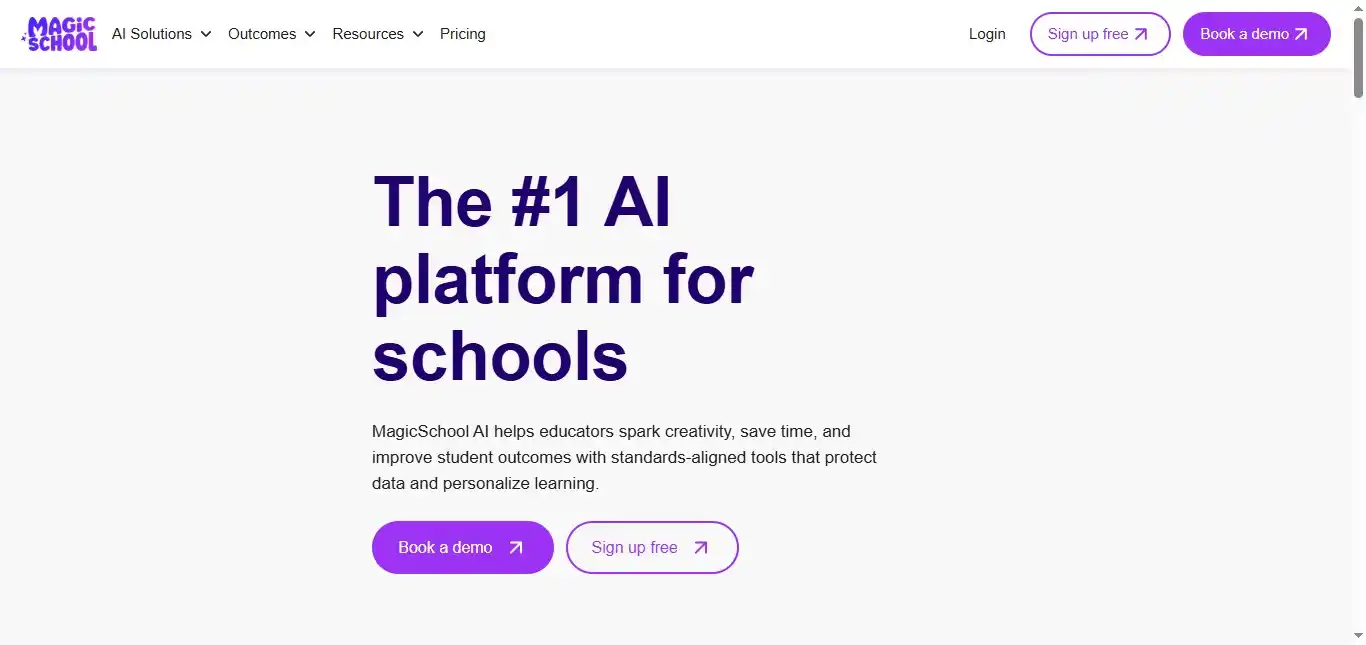
The free plan is enough to plan with. The paid Plus plan ($12.99/month, or $8.33/month billed annually, as of October 2026) adds unlimited generations, unlimited output history and editing, and 50+ student-facing tools. MagicSchool’s pricing page doesn’t list standards alignment as a feature, so put the standard code and its wording in the objective field, then check that the activities and assessment really address it.
Use it for:
- A first-draft lesson plan from a single objective
- Rubrics, exit tickets and quizzes that match the plan
- Rewriting a text at a different reading level for the same lesson
Khanmigo for Teachers
Khan Academy’s Khanmigo is free for teachers, and Khan Academy says Microsoft’s support pays for that. Its teacher tools include standards-aligned lesson plans, learning objectives, lesson hooks, rubrics, exit tickets, quiz questions and student grouping suggestions. Plans can draw on Khan Academy’s own content library.
Two limits: availability depends on your country, and an individual teacher can’t give students access to Khanmigo. Only a district that adopts it can do that.
Eduaide.ai
Eduaide focuses on guided workflows rather than open prompts. It has a lesson plan generator and 110+ resource templates (graphic organizers, games, question sets, discussion activities). You can browse and apply standards from 50+ jurisdictions, including Common Core, NGSS and state standards, and ground materials in your own documents, websites or videos.
The free plan covers about 8 resources a month (24 credits) and limits how much standards input and uploaded material you can add. Pro is $49.99/year (as of October 2026) for unlimited generations, differentiation and YouTube transcript imports. If standards alignment is the main reason you’re looking, test Eduaide.
BriskTeaching
Brisk works differently: it’s a Chrome and Edge extension that adds AI to the pages you already have open, such as Google Docs, Slides, YouTube and your LMS. That makes it strongest when you already have material, like an article, a video or last year’s slides, and want to summarize articles, change their reading level or turn them into a lesson.
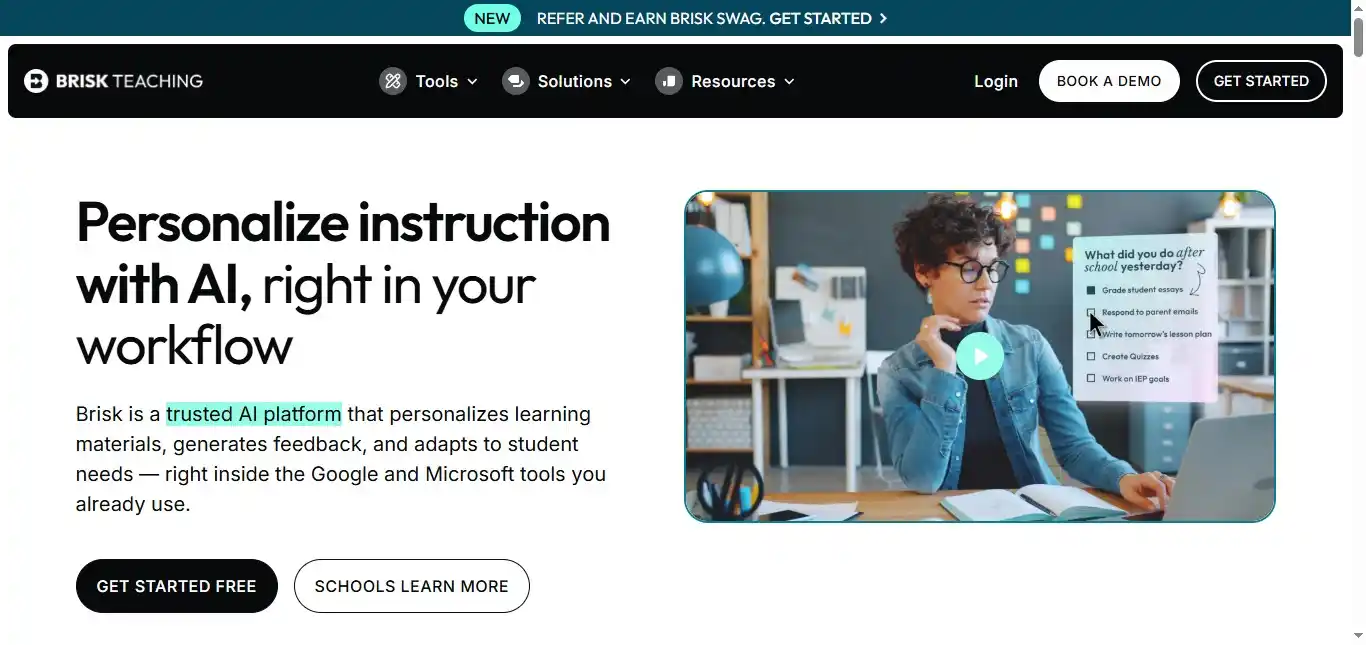
Its free teacher plan includes 20+ tools with unlimited usage, among them a lesson plan generator, quiz and presentation makers, rubric and feedback tools, and generating materials in 50+ languages. Standards-aligned outputs are listed on Brisk’s paid Premium plan for schools and districts, not the free plan. On the free plan, add the standard yourself.
Use it for:
- Turning a news article or YouTube video into a lesson, discussion prompts or a quiz
- Making leveled versions of the same text for different readers
- Quick feedback on student writing in Google Docs
General AI Assistants You Can Prompt
General chatbots aren’t built for education, but they’re flexible and often have generous free tiers. The trade-off is that you have to give them the structure a teacher tool would ask for.
ChatGPT for Teachers
OpenAI’s ChatGPT for Teachers is a separate workspace for educators. It’s free for verified U.S. K–12 teachers, staff and school leaders. OpenAI launched it as free through June 2027, and its August 2026 expansion announcement puts the date at June 2028. You verify with your school email. OpenAI describes it as a secure workspace with education-grade privacy and admin controls, and it can bring in files from Google Drive or Microsoft 365 and build presentations with Canva, so you can work from your existing lesson files. If you teach outside U.S. K–12, the regular free ChatGPT plan still works with the prompt below.
Gemini (Google AI)
There are two ways to use Gemini for planning. The free Gemini app works with any Google account. If your school uses Google Workspace for Education (Fundamentals, Standard or Plus), Gemini in Classroom puts teacher tools in the Classroom sidebar. They can outline a lesson plan, generate a quiz, write an informational text, address common misconceptions, translate text and suggest differentiation strategies.
Gemini in Classroom is the easiest option if your class already lives in Google Classroom, because the draft sits next to your assignments.
Claude
Claude isn’t an education-specific tool, but its free plan handles long, detailed prompts well. That makes it useful for brainstorming lesson hooks, explaining a hard concept several ways, or rewriting a text for different reading levels.
A Prompt for a Standards-Aligned Plan
General assistants give generic plans when the prompt is generic. Fill in the brackets:
Write a [45]-minute lesson plan for [grade 7] [science] on [photosynthesis]. Align it to [standard code and full wording]. Include: one measurable learning objective, a 5-minute hook, direct instruction, a guided activity, independent practice, differentiation for [English learners / students reading below grade level / early finishers], a 3-question exit ticket that checks the objective, and materials needed. Students have [prior knowledge]. Keep the timings realistic.
Then ask for the follow-ups in the same chat: “Make a rubric for the independent task,” “Rewrite the reading at a grade 5 level,” or “Turn the exit ticket into a five-question quiz.”
Check an AI Lesson Plan Before You Teach It
AI planners write convincing drafts that can still be wrong. Five minutes of checking saves a bad lesson:
- Standard: does the assessment actually measure the standard, or just the topic? Read the standard’s wording against the exit ticket.
- Facts and examples: check dates, formulas, definitions and any “real-world” examples. AI tools sometimes invent sources and statistics.
- Timing: add up the minutes. AI plans often put three activities into 45 minutes.
- Level: reading passages and vocabulary should match your students, not the grade label.
- Privacy: don’t paste student names, grades or IEP details into a tool your school hasn’t approved. Use initials or general descriptions.
Tools for the Rest of Your Prep Time
A lesson plan is only part of the workload. Grading, materials and admin take up the rest of the week. These tools help with that side.
TubeOnAI - Faster Prep From Videos and Podcasts
If you build lessons around videos, podcasts or articles, TubeOnAI saves you from watching or reading everything in full before deciding what to use.
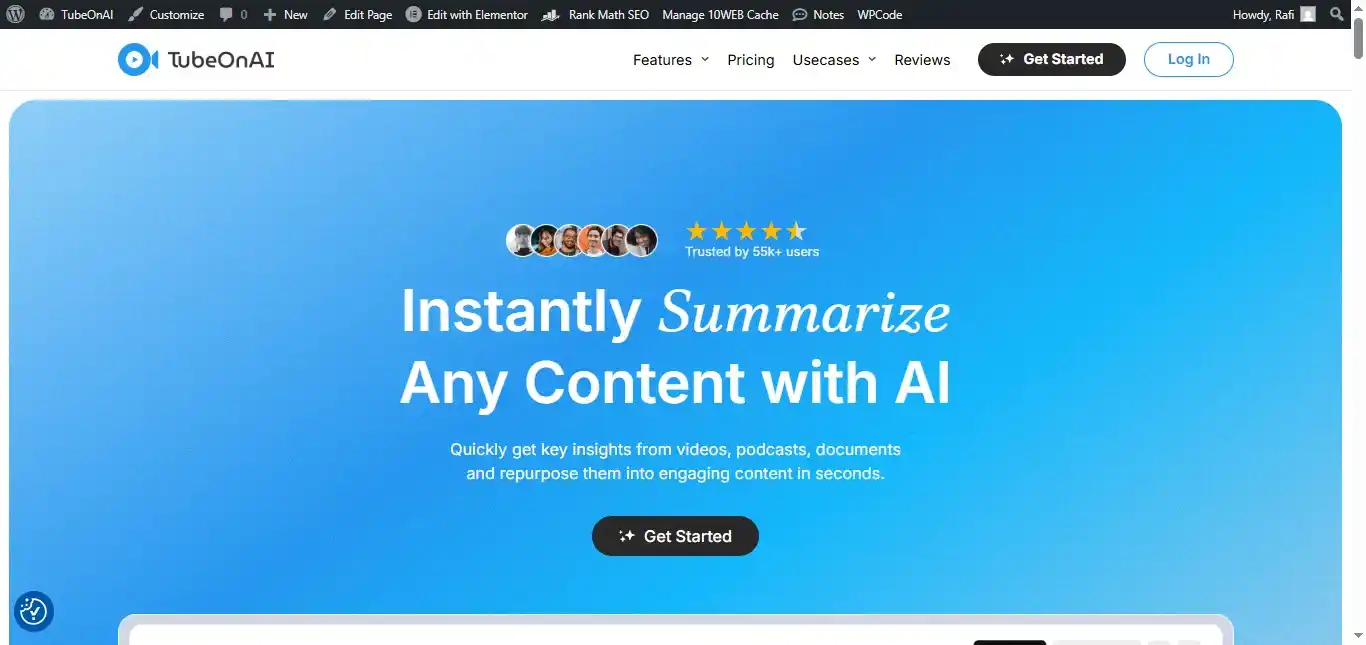
- Preview content quickly: get a summary of educational videos, long YouTube lectures, podcasts, PDFs, web articles and Google Docs or Slides, so you can decide which parts are worth class time.
- Ask follow-up questions: chat with a summary to pull out key terms, examples or discussion questions.
- Listen instead of read: turn a text summary into audio for your commute. For full wording, see how to get podcast transcripts or a transcript of a YouTube video.
- Translate: summaries can be translated into 30+ languages, which helps with multilingual classes and family communication.
The free Starter plan includes 400 credits; paid plans start at $9/month (see pricing).
Google Classroom - Assignments and Materials in One Place
Google Classroom is a free platform for posting materials, collecting assignments, giving feedback and sending class announcements, so student work isn’t scattered across paper and email. Pair it with Google Calendar for meetings and deadlines, and with Gemini in Classroom (above) if your school has it.
Trello - Plan the Term Visually
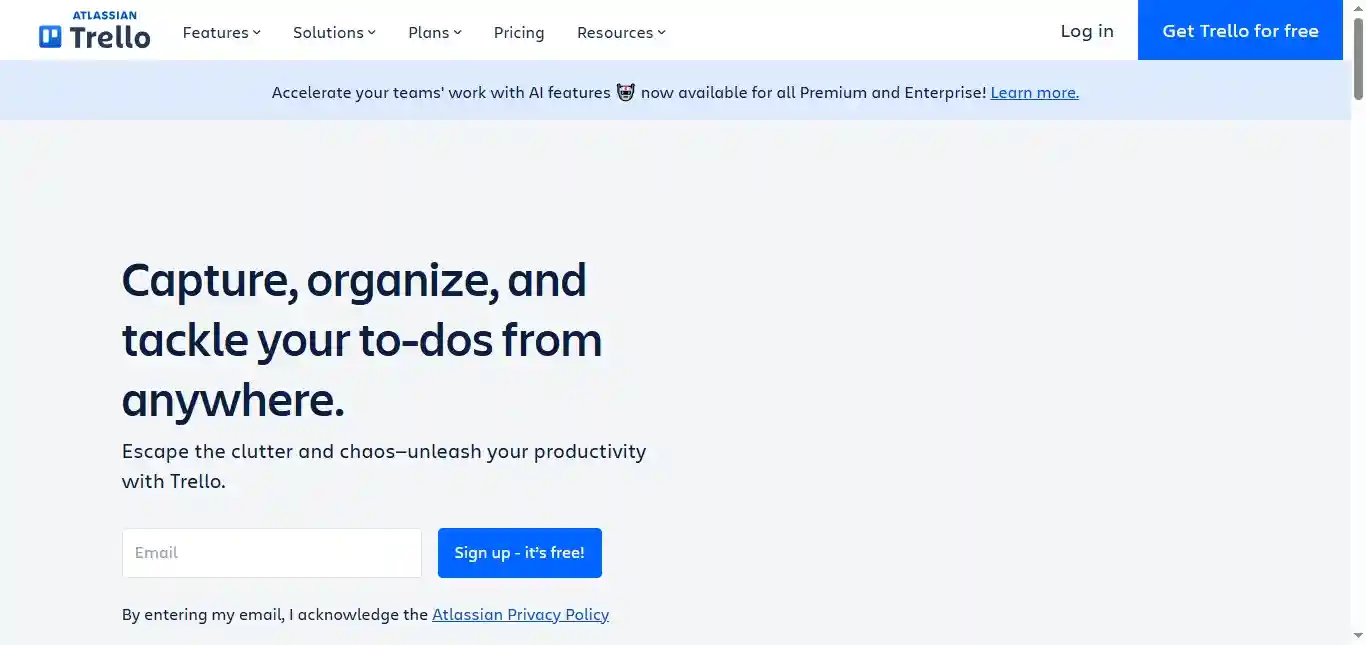
Trello organizes work as boards of cards. A simple setup for teachers: one board per class with lists for “To plan,” “Planned,” “Taught” and “Needs grading,” and a card for each lesson. Moving a card along shows how far into the unit you are.
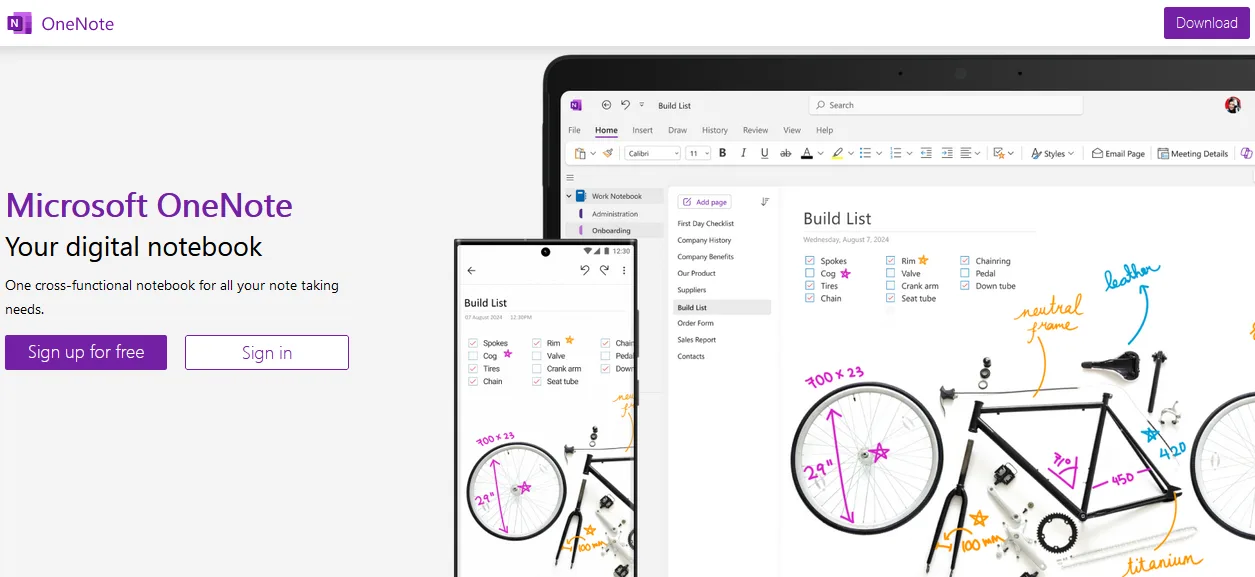
Microsoft OneNote - Keep Lesson Plans in One Notebook
OneNote is a digital notebook that syncs across your devices, so you can start a plan at school and finish it at home. One section per class and one page per lesson keeps plans, notes and resources together, which helps you stay organized from year to year.
RescueTime - See Where Your Prep Time Goes
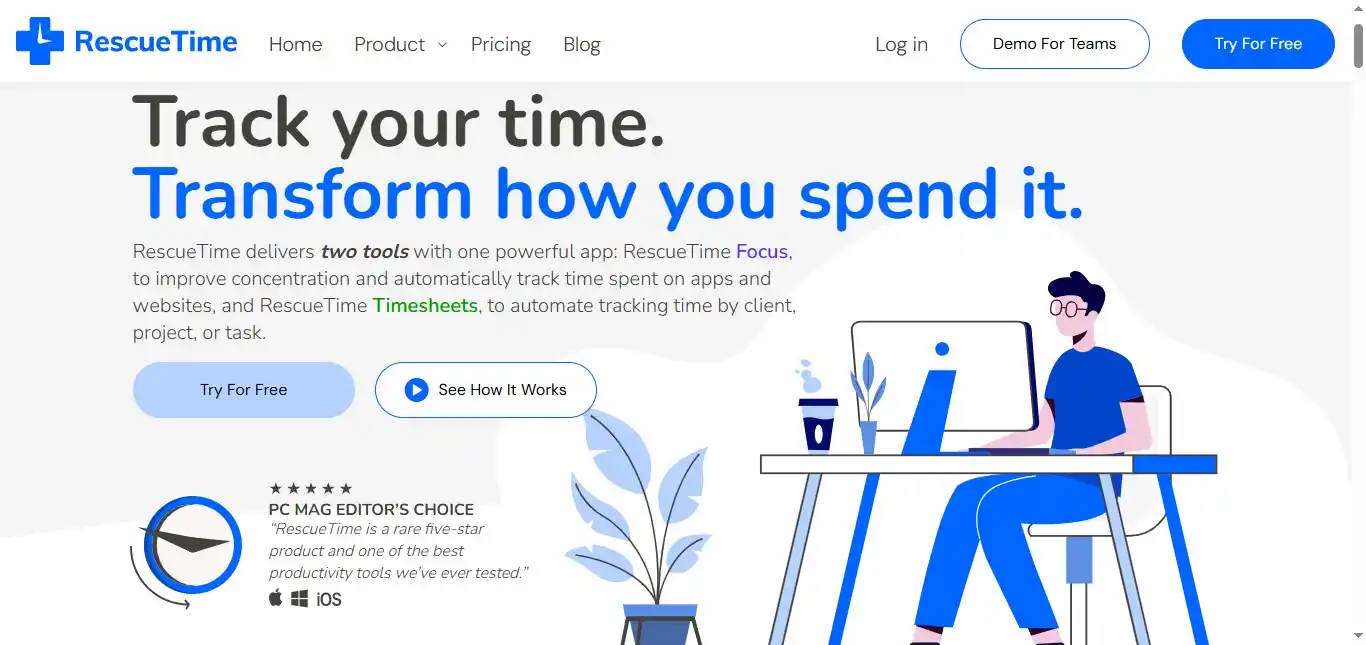
RescueTime tracks time on your devices automatically and reports where it went: email, planning documents, grading platforms or distracting sites. Use it for a week to find out where your planning hours really go.
Time Management Habits That Make Planning Easier
The tools work better with a few habits:
- Plan the week, not the morning. Sketch the week’s lessons, grading and meetings on Sunday or a quiet evening, then let an AI planner draft the individual lessons.
- Reuse and adapt. Keep last year’s plans in one place (OneNote, Drive) and ask an AI tool to update or differentiate them instead of starting over.
- Time-box tasks. Give grading or planning a 25–30 minute timer, then take a short break.
- Break big jobs down. Plan one class or one subject at a time, not the whole week at once.
- Protect quiet work time. Set times when students can ask for help, and keep a block for yourself. A browser extension that blocks distracting sites can help when you plan on a laptop.
- Keep lessons simple. Focus on the few points students must learn. Simple lessons are often easier to teach well.
- Delegate. Teaching assistants and responsible students can hand out materials or collect work, and auto-graded quizzes handle multiple-choice checks.
- Use the 80/20 rule and set boundaries. Put your best energy into the lessons and feedback that matter most, say no to extras when you’re stretched, and accept that a good-enough plan you can teach beats a perfect one you never finish.
Final Thoughts
For most teachers, the fastest free setup is one teacher-specific planner (MagicSchool or Khanmigo, or Eduaide.ai if you need standards selection) plus a general assistant for everything else. U.S. K–12 teachers should claim ChatGPT for Teachers while it’s free. Whatever you choose, give the tool your standard, your timing and your students’ needs, then check the draft before it reaches the classroom.